

Dr. Swistun says the moment a woman decides her implants have to come out is his best chance to help — there's no right or wrong answer, only her goals.
And he's blunt about one thing: put a new breast implant back in and you're automatically signing up for another surgery down the road, because no breast implants last forever.
Monique Ramsey gathers the show's best explant surgery conversations into one guide — the decision, the operation, and the after.
Dr. Swistun explains what a total intact capsulectomy actually is, why getting back to 'factory settings' takes far longer than putting an implant in, and how auto-augmentation reshapes the tissue you already have so you can stay full without an implant.
Then real women — Jennifer, Caroline, and Amie — describe what removal was actually like, and one husband, Michael, shares what it was like to watch his wife go through it, skeptical at first and won over after.
One woman put it in a way that sticks: she felt like a prisoner in her own body, and now she feels liberated. No hype, no pressure — just what removal really involves.
Links
Meet San Diego plastic surgeon Dr. Luke Swistun: Dr. Luke Swistun
Learn more about breast implant removal: breast implant removal
Questions answered by this episode
- What is a total intact capsulectomy?
- What is the breast capsule and why does it need to be removed?
- Why does explant sometimes cost more than the original breast augmentation?
- Can you stay full after breast implant removal without new implants?
- What is auto-augmentation during explant?
- Should you replace your breast implants or remove them for good?
- What does breast implant illness feel like?
- What will your breasts look like after implants are removed?
- Is a breast lift done at the same time as implant removal?
- How do women feel emotionally after explant?
About this podcast
Learn from the talented plastic surgeons inside La Jolla Cosmetic Surgery Centre, the 12x winner of the San Diego's Best Union-Tribune Readers Poll, global winner of the 2020 MyFaceMyBody Best Cosmetic/Plastic Surgery Practice, and the 2025 winner of Best Cosmetic Surgery Group in San Diego Magazine's Best of San Diego Awards.
Join hostess Monique Ramsey as she takes you inside LJCSC, where dreams become real. Featuring the unique expertise of San Diego's most loved plastic surgeons, this podcast covers the latest trends in aesthetic surgery, including breast augmentation, breast implant removal, tummy tuck, mommy makeover, labiaplasty, facelifts and rhinoplasty.
La Jolla Cosmetic Surgery Centre is located just off the I-5 San Diego Freeway at 9850 Genesee Ave, Suite 130 in the Ximed building on the Scripps Memorial Hospital campus.
To learn more, go to LJCSC.com or follow the team on Instagram @LJCSC
Watch the LJCSC Dream Team on YouTube @LaJollaCosmeticSurgeryCentre
The La Jolla Cosmetic Surgery Podcast is a production of The Axis: theaxis.io
Theme music: Busy People, SOOP
Amie (00:00):
I just feel like myself. I feel like I'm in my own body. I don't remember the last time I felt so comfortable in my own skin as imperfect as my breasts are. There's scarring now and I don't care. I think it's amazing. I just feel like rejuvenated.
Announcer (00:19):
You're listening to The La Jolla Cosmetic Podcast with Monique Ramsey.
Monique Ramsey (00:24):
If you're thinking about removing your breast implants, you're probably feeling two things at once: Sure about the decision and unsure about almost everything else. What the surgery involves, what you'll look like after, whether you'll regret it. I'm Monique Ramsey and explant has become one of the most asked about topics on this show. So our surgeons and our patients have talked through every part of it. I've gathered the best of those conversations here start to finish, making the decision, the surgery itself, what comes after, and real women who've been exactly where you are. No hype, no pressure, just what we've actually learned. Let's talk about at the beginning, what was that pain feeling like and how long had that been going on?
Jennifer (01:13):
Yes. So it's been going on, I would say the last 10 years. I noticed my left side has capsulated contracture, which means the scar tissue grabs onto the implant and pulls it up. So one of my breasts is a little higher and a little painful underneath and a little harder underneath. And the other one is okay, but it's grown so much from when I first got the implants they've grown from a D to triple Ds. So I've grown a lot of tissue from some weird reason, yes.
Monique Ramsey (01:52):
Yeah. So if they're getting bigger and they hurt and they hurt for that long, I'm so sorry they were hurting you for that long.
Jennifer (01:57):
Yeah. I believe it's the scar tissue that has made it so painful. Scar tissue's painful.
Dr. Swistun (02:04):
Whenever a patient is at that crossroads, I have implants, I know they have to come out. I'm at a crossroads. Do I put another implant back in or do I take it out? That is an excellent opportunity for me to intervene because there's no right or wrong answer here. It just depends on the goals. But if you put another implant in, you are automatically signing up for another surgery in your lifetime later on to get those implants out because a shelf life of an implant is shorter than anybody's lifespan. I don't care what age they are. I've told that to 70 year olds.
Monique Ramsey (02:37):
So once you've made the decision or you're close, the questions turn practical. What actually happens in this surgery? What's this capsule everyone mentions? Why can it cost more than the original augmentation? And how do you stay full afterwards without implants? Here's the surgery itself.
Dr. Swistun (02:57):
So the new term that they came up with for what my patients are asking for is actually a total intact capsulectomy, which makes perfect sense because what we're going for is we are removing the entire capsule intact as in the whole capsule is there and the implant's still inside. And that's basically what that is. And we're trying to minimize the collateral damage to the surrounding structures to preserve the patient's function otherwise once the capsule was removed. The other term that they released recently is basically a total capsulectomy or a total precise capsulectomy, which they define as complete removal of the breast implant capsule, but not necessarily done as a single unit or in one piece, which I also agree with. That's also something that I do pretty frequently. If I can't get the entire capsule out in one piece, because let's say it's dangerous, let's say the capsule's sort of in the way of me seeing the anatomy very well and there's a risk of me kind of cutting a little bit too deep and maybe going through the intercostal muscle and into the chest where the lung is, I don't want to do that.
(03:57):
So occasionally what I'll do is I'll remove the vast majority of the capsule with the implant inside as one piece. And then there will be a small piece left over on the chest, which I will then go back for under direct visualization so that I can minimize the collateral damage to the surrounding structures under that one piece. But this way I can see it better once the implant's out of the way, once the capsule's out of the way, so I can be a lot more precise in this dissection. So that's what a total precise capsulectomy refers to in their terminology. If you think about a breast implant, those have a pretty large footprint on the patient's chest. They're right on top of the ribs, like four or five ribs. They're underneath the pectoralis major muscle, underneath the bottom of the breast and on top of the pectoralis minor, which is off to the side there.
(04:40):
And all of those are now covered in this capsule. So if a patient really insists on just being brought back to factory settings, which is a term I hear a lot and wants everything out including the implant and the capsule, now we have to be very careful negotiating the capsule off of all those structures without causing a lot of collateral damage. And that's the part that takes a lot more time. That's the part that actually usually requires a longer incision and that's also a part that we cannot do under local. So right away, if you just want to deal with the sequelae of having an implant and nothing else, getting the implant out and the capsule out, that already puts us in a category where it's a lot more complicated than just putting an implant in. The bigger issue that comes up afterwards is now after we remove the implant and the capsule, then the patient is back to square one.
(05:29):
They're basically back to the shape of the breast that they started off with that prompted them to get the implant in the first place. The question to ask is, are you happy with your volume? As if to say, if you were going to take the breast tie that you already have and gather it up high in, let's say a bra, like a non-padded pushup bra, would that be enough volume for you or do you want more volume? And I'm surprised most patients will say like, no, that's actually enough volume. I don't need the breast to be bigger. I just need it to stay up here. That's all I want.
Monique Ramsey (05:59):
Right.
Dr. Swistun (05:59):
And that's where these auto augmentation techniques come handy because all we're doing is basically taking all that volume that's already there and reshaping it higher and tighter towards the center.
Monique Ramsey (06:11):
Okay. That's the operation. Now the question almost everyone is really asking, even when they don't say it out loud, is what am I going to look like and how am I going to feel? Both matter. And we've talked honestly about each.
Dr. Swistun (06:31):
Typically though, what happens after implants is that volume gets splayed out over a larger surface area, which is to say when a patient has an implant in or gained a little bit more weight, then the breast footprint grows in response to that. So then with the implant, the breast footprint is lower and maybe wider. So whatever tissue they do have is spread over a larger surface area and therefore less projected centrally. So what we end up doing once we remove the implant, obviously the lift is sort of the best way to gather up all that tissue into a smaller footprint, but therefore more projection. And then the part of that we talk about when we talk about auto augmentation is that we really want to optimize that opportunity and not waste any breast tissue that we possibly can. I ask very open-ended questions at the six month mark when we first see them again after six months after the surgery.
(07:24):
And basically the question is like, was it worth it? Was it a good idea to go through the surgery of getting your implants out? And usually the immediate response is like, "Oh my God, best thing I've done for myself in my life." I'm like, "Okay, well elaborate." And then a lot of times it's like, I didn't know how much they were affecting me until they were out. And it all links back to my life is better now. I feel happier. I feel more at ease. I feel just more like me. Okay. I did not realize how sick I was until I started feeling better. Swipe. I feel I got my life back. I got my body back. I got me back. Where was I all this time? Where have I been? Literally. Where was I all this time? Now it's me again. Everything is brighter and sharper.
(08:10):
That was literally the comment. My implants are out and I'm just like, everything's just brighter. Everything is sharper. Everything is just happier. It's like my inner light was dimmed the whole time and now it's back on again. That's another one. And that was just profound. Yeah. Or another one is just, I feel like I'm me. Bold letters me. No regrets whatsoever. And then another one, I felt like I was a prisoner in my own body and now I feel liberated.
Monique Ramsey (08:41):
But there's only so much a surgeon can tell you. Sometimes the thing that finally settles your mind is hearing it from someone who actually did it. So here are a few of our patients in their own words on what implant removal was really like and even a husband's take on watching his wife go through it.
Caroline (09:02):
It feels like you're getting ready to leave the relationship. And for me, it was a 10 year one. And it was just like, yeah, there was so many different emotions. And I was just really tender and gave myself a lot of grace. I would have days where I was so excited and I was like, "Get these things out of me right now." Not even like, "I hate these." I was like, "I love you guys and you need to get out. We're done. I love you, but... I love you and
Monique Ramsey (09:29):
It's not you, it's me. Oh, but it is you. It is you actually.
Caroline (09:33):
It's literally, it's not yet. It is you, but okay. Yes. And so we're parting ways. And so I'd have days of just really excited and I'd be crying tears of joy. And then other days I'd be in a little mini portal of grief, sadness. And people could help me and I had friends that could help me and hold space. I had a mentor I was working with, but no one can really understand unless they've been through it.
Amie (10:02):
I was telling Dr. Swistun when I saw him at my six month post-op and I said, "I just feel like myself. I feel like I'm in my own body. I don't remember the last time I felt so comfortable in my own skin. As imperfect as my breasts are, there's scarring now and I don't care. I think it's amazing when I play soccer. I'm able to be more aggressive and I feel faster. I feel younger because I'm not worried about these things getting in my way or me rupturing these breast implants that I have. I think it affects because of the way that it's placed in your body. It's affecting your shoulders, everything. The way that you move, the way that you breathe. I just feel like rejuvenated.
Monique Ramsey (10:54):
So in the time leading up to her saying, "You know what? I want to get them taken out. " Was there a moment that pushed you over the edge where you said, "Yeah, go get it done." Or was there ever a change for you or you just thought, "Yeah, let's see if that helps."
Michael (11:13):
Well, I wanted to be supportive of her. She had done a lot of research and she really felt like this was the way to go. When she went into the doctor's office or into surgery to get it done, I was skeptical even after the things that I've read. I think part of it was that I was scared for her that she was going to regret doing it and she'd be six months down the road or you're like, "Oh my gosh, what did I just do? " But that was not the case at all. And she's been very happy with the results.
Monique Ramsey (12:00):
So that's explant all the way through the decision, the surgery and after and the women who've lived it. If you're somewhere on that journey right now, the best next step is a conversation with a surgeon who will listen first and tell you the truth about your options. There's no rush and there's no wrong question. I'm Monique Ramsey and thanks for being here.
Announcer (12:26):
Take a screenshot of this podcast episode with your phone and show it at your consultation or appointment or mention the promo code PODCAST to receive $25 off any service or product of $50 or more at La Jolla Cosmetic. La Jolla Cosmetic is located just off the I - 5 San Diego Freeway in the XiMed building on the Scripps Memorial Hospital campus. To learn more, go to ljcsc.com or follow the team on Instagram @LJCSC. The La Jolla Cosmetic Podcast is a production of The Axis, T-H-E-A-X-I-S.io.
Plastic Surgeon
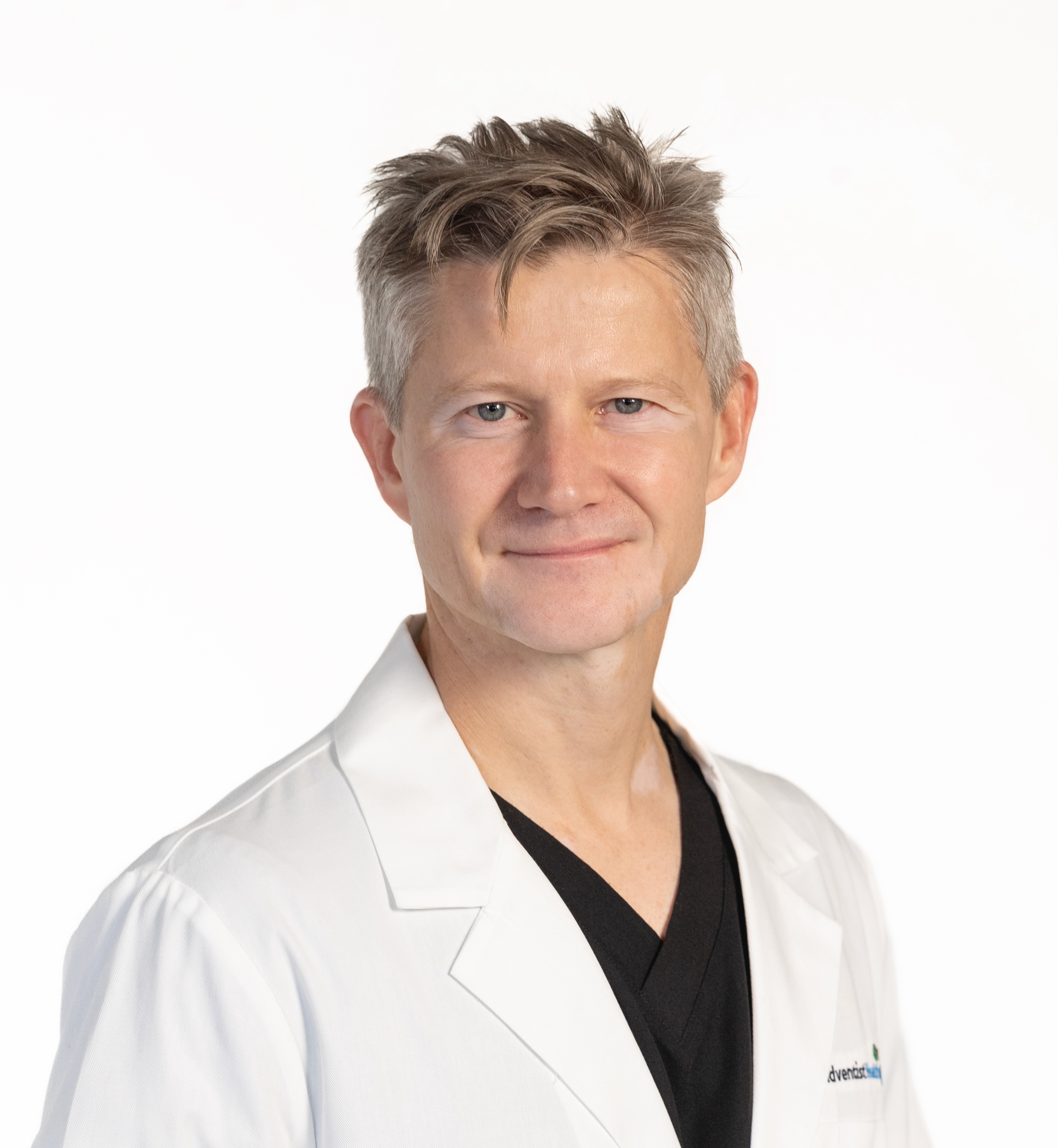
Dr. Luke Swistun is a board-certified plastic surgeon with a background in visual arts and medical military service. He’s known for his artistic approach to plastic surgery and for the close, supportive relationship he forms with every person he treats.
As a plastic surgeon, Dr. Swistun has years of general surgery and plastic surgery training. He attended medical school at the University of Illinois. He completed his general surgical training while in the navy and continued his Plastic and Reconstructive training at the University of Utah. After serving as a naval medical officer and deploying with the U.S. Marines during active conflicts, he completed his general surgery training, and subsequently focused on pursuing what he truly felt is his calling: reconstructive and plastic surgery.