


Monique Ramsey gathers the smartest guidance from LJCSC's plastic surgeons and the women who chose them.
Dr. Diana Breister Ghosh compares Motiva and Natrelle, explains who should pick a round implant over an ergonomic one, and makes the case for placement on top of the muscle.
Dr. Salazar-Reyes covers silent ruptures, why the $2,500 MRI rarely happens, and the in-office Butterfly iQ3 ultrasound that now handles implant monitoring for $450.
Marissa, Kayla, and San Diego radio host Laura Cain share what recovery is really like, from sleeping restrictions to a hematoma scare handled over a weekend.
Stay for the reason feeling fantastic three days after surgery makes Dr. Salazar-Reyes nervous, and why a solo trip to the grocery store is the classic mistake.
Links
Meet San Diego plastic surgeon Dr. Hector Salazar-Reyes
Meet San Diego plastic surgeon Dr. Diana Breister GhoshLearn more about breast augmentation
Questions answered by this episode
- How do I choose the right breast implant size for my frame?
- What is the difference between Motiva and Natrelle breast implants?
- Do breast implants have to be replaced every 10 years?
- What is a silent rupture and how would I know if my implant ruptured?
- How are breast implants monitored without an expensive MRI?
- Does implant placement above or below the muscle change recovery?
- What should you avoid doing in the first weeks after breast augmentation?
- What is capsular contracture and how is it treated?
- Is it normal to feel emotional ups and downs after breast augmentation?
About this podcast
Learn from the talented plastic surgeons inside La Jolla Cosmetic Surgery Centre, the 12x winner of the San Diego's Best Union-Tribune Readers Poll, global winner of the 2020 MyFaceMyBody Best Cosmetic/Plastic Surgery Practice, and the 2025 winner of Best Cosmetic Surgery Group in San Diego Magazine's Best of San Diego Awards.
Join hostess Monique Ramsey as she takes you inside LJCSC, where dreams become real. Featuring the unique expertise of San Diego's most loved plastic surgeons, this podcast covers the latest trends in aesthetic surgery, including breast augmentation, breast implant removal, tummy tuck, mommy makeover, labiaplasty, facelifts and rhinoplasty.
La Jolla Cosmetic Surgery Centre is located just off the I-5 San Diego Freeway at 9850 Genesee Ave, Suite 130 in the Ximed building on the Scripps Memorial Hospital campus.
To learn more, go to LJCSC.com or follow the team on Instagram @LJCSC
Watch the LJCSC Dream Team on YouTube @LaJollaCosmeticSurgeryCentre
The La Jolla Cosmetic Surgery Podcast is a production of The Axis: theaxis.io
Theme music: Busy People, SOOP
Monique Ramsey (00:00):
Did you have at any point any regrets or doubts about should I have done this or not done this?
Laura Cain (00:04):
Oh my God, no. The only thing that I regret, and again, I'm glad that I waited because of having it done here, is that I didn't do it sooner. You're listening to The La Jolla Cosmetic Podcast with Monique Ramsey.
Monique Ramsey (00:22):
Welcome to the Breast Augmentation Masterclass. Today we're pulling together almost everything you need to know before walking down the surgical path, how to choose your implant, what recovery really feels like, the complications we work hard to prevent, and real stories from women who have been exactly where you are. The one piece we're saving for its own episode is the consultation itself, how you and your surgeon land on the right size and the right approach for you. That one's coming soon with Dr. Hector Salazar. For now, let's get into it.
Dr. Breister (00:56):
I like to present the information. I think Natrelle is an amazing implant still. I think it's got really. It's state of the art in its own way. So I like to present both options to patients. I mean, I say that right at this moment, Motiva seems to be my preference because of these things I've already talked about, but I tell them to do a little bit of research on their own. I want them to feel comfortable. I don't want them to feel like I'm selling them. Now, it's well known that someone who's had a capsule before is a higher likelihood to have a capsule again. So I will definitely steer them towards the Motiva because it's always good to try something different. If you've got a capsule already, there are other options for that too, but it's beyond the scope of this talk. But I will kind of guide them in that direction.
(01:49):
So I like to give them the information and tell them my thoughts, but kind of let them. I think women are pretty savvy these days. They really do their research. I trust women's gut. There's still plenty of women that come in and say, "I want saline." And I don't argue with that at all. I say, "That's a good choice for you. You want that? That works." Now, unless they were incredibly thin, I will tell them the downfalls of saline. But like I said, most women really have a good sense of what they want in their body and they've done a lot of research on it. So I tend to want to trust their gut feelings and guide them in a gentle way with science and that sort of thing. There is the Motiva round, and I should have brought a couple in here to show you guys, and then there's the Motiva ergonomix.
(02:39):
So what I would put those into two categories is that the round implant is more round, essentially. It's got a little more fullness and holds its shape a little bit better than the ergonomic. Think of the ergonomic more as slightly teardropped so that when you hold that implant on its side, gravity is going to pull some of that gel down to the bottom. So I would say that women who are really requesting a natural, natural, natural result, they really want it just to go seamless with their body and not look any different than a natural breast would, I would steer them absolutely towards the ergonomic. And then the women who really are excited for that upper pole fulness, they want a rounder look in their clothes, they feel like they want an implant that stands up a little more, I would most likely direct it towards the round. Ultimately, yes, those things like the round or the ergonomic or the dimensions, the higher profile, the lower profiles, those things all matter. They're very nuanced though. It really comes down to size is what I really tell women that if you're going to choose a bigger implant, if we're putting that into a small pocket, it's going to look very round. So it's really about choosing the proper size in conjunction with the round versus the ergonomic versus the profile, the dimension.
(04:12):
The thing that I was most drawn to this implant is because of this surface for microns, it has been shown that there's a less degree of encapsulation when that implant is placed on top of the muscle. That gives us an entire new world of options in breast implants. Not every woman can go on top of the muscle, nor should they, but there are a lot of women who can. And if so, there are advantages to that pocket placement. Number one, you're not going to have any kind of animation deformity, meaning the muscle's not going to pull that implant in any way, shape or form. Number two, it's less painful because if you're not dividing the muscle, that's helpful, less painful. Less bleeding can happen. The muscle's very vascular. So there are several really great reasons to go on top of the muscle if that's possible, if the woman has a body that can support that, if there's enough soft tissue.
Monique Ramsey (05:17):
They kind of say, okay, the lifetime. It's not a lifetime device. An implant is not a lifetime device for a breast. So is the 10 year school of thought the same or -
Dr. Breister (05:30):
The 10 year kind of urban legend, I call it, is completely out the window for any implants in my mind. I think that at five years, women should start monitoring their devices and I recommend a high resolution ultrasound for that. Once they do that, they can repeat that every several years. If there's no visible problem they feel within their implants, I believe it's safe to keep them in beyond 10 years and well beyond 10 years if those things check out. So Motiva or Allergan or saline, whatever it is, I think a high resolution ultrasound starting at three to five years is the way to go in making sure that your implant is intact.
Monique Ramsey (06:21):
Can you explain what a silent rupture is and why it can go unnoticed for so long?
Dr. Salazar (06:27):
So a silent rupture is basically, as the name states, it's a rupture or loss of integrity of an implant, but that you don't realize that it's completely asymptomatic, there's nothing going on and you're walking around, you're carrying your implant broken, it's ruptured. It's not intact anymore. One of the things that I always share with my patients is that an implant is no different than any other foreign body that has been implanted, that has been introduced to your body. So what I mean by that is it could be a medical device or even a non-medical device that was implanted in your body such as a splinter or even think about like a bullet that was never removed or something that gets inside and then your body recognizes it as not part of your own system and then your body is going to protect you regardless of which type of foreign body that is, in this case a breast implant, but could be a pacemaker, forming a capsule around your implant, depositing some cells around your implant.
(07:42):
So that happens 100% of the time. After implantation, patients will develop a capsule made out of their own tissue. I know that we have many, many chapters in this topic about the capsule around the implant, but just to remind everybody that since that capsule is formed, most of the time, around 90% of the time when an implant is ruptured, it suffers an intra-capsular rupture, meaning that the rupture stays within that capsule that your body has formed to protect you from that.
Monique Ramsey (08:16):
And what is their recommendation? What is the timing of what they think people should do?
Dr. Salazar (08:22):
Timing has changed. In the past used to be after three years obtaining an MRI and then every other year. Now the recommendation has changed to five years after you have your implants placed and then every two to three years after that. But it has always been an MRI until recently, relatively recently, that the recommendation has changed as technology has caught up.
Monique Ramsey (08:54):
I would think only a very few patients are actually following through on the MRI screening just because it's expensive, right?
Dr. Salazar (09:02):
It is expensive. It's hard to get. Since it's expensive, it can reach up to 2,500 up to $2,800 if you're paying out of pocket and you say, "Well, why not pursue it through your insurance and through your primary care doctor?" You go to your primary care doctor who says, "How do you feel? I feel fine. There's no problems. I have no symptoms. By the way, I was told by my plastic surgeon that I should get an MRI to check up on my implants." And what happens is the primary care doctor will put in the order, as you know, through insurance, everything has to be approved if it's not an emergency MRI. And what will happen is insurance company will not approve it. Basically, they would claim, "Well, you were not born with implants, you elected to have implants. And for that reason, you have to pay for it out of pocket." And then it becomes very, very difficult.
(09:57):
At some point, if you think about it, I mean, the FDA also recommends to have your implants exchanged every 10 years. So that means that if you're getting an MRI around three to four years after you have it and then every other year, and then basically by year number 10, you practically have paid for another pair of implants while you were trying to figure out if they were intact or not. Technology has caught up and now we have high definition ultrasounds and high definition ultrasounds would this actually allow the recommendation of the FDA to make it a little broader in terms of what image studies you can get. And as anybody, including all of our audience out there, everybody knows that an MRI, I mean, it's something that it's very technologically sophisticated. You require a big, big room, you require a dedicated facility for you to have that MRI.
(10:56):
And then even you cannot, for instance, even in hospitals, you have to place an MRI machine device in a special particular room that has to be away from certain other parts of the hospital because of how much electromagnetic force it generates. So it's very expensive. And contrary to that, high definition ultrasound, now they're portable. Now they are available for you to purchase at a doctor's office versus. I mean, we would have to buy an MRI, we would have to cancel two, three of our examine rooms and then to be able to get that in there. So it's very impractical and the ultrasound is great. So high definition has displays a better image and now you can clearly see and follow the shell of the implant to make sure that it is intact.
Monique Ramsey (11:52):
Okay. So the technology in the office is called the Butterfly IQ3, which means nothing to any of us, but that's what it's called. And it's ultrasound technology. And how is it different than regular ultrasound or is it not?
Dr. Salazar (12:09):
So it is ultrasound. It's ultrasound with great definition. As a matter of fact, look what I have over here. Let me see if I can show it on camera. So that is the probe. As you can see, it's very portable. This gets connected to a screen and then that is number one, office-based, low cost. It is dynamic, meaning when you're in an MRI machine, you're just sitting there, they're taking a picture in time. Over here, we can push and pull and make things tighter or let them go. And it's simpler. It's much simpler. It's quicker than an MRI process. And definitely it's, I would say, the way to go for monitoring your implants.
Monique Ramsey (12:55):
I think that affordability part keeps the compliance high. If the FDA is recommending certain visits at certain times, I think in our office, the ultrasound appointment is $450. Whether you had your implants with us or you had your implants in Hawaii, it's the same. Then how often would you recommend that that patient come back and maybe do an ultrasound check?
Dr. Salazar (13:25):
So you're talking about every two to three years to have. And again, I mean, I wouldn't say that patients need to really stress and set up an alarm because implants are very good devices. They rarely, extremely rarely fail.
Monique Ramsey (13:47):
Does implant placement, where you're putting that implant, does that impact the length of time that you have for recovery? So whether it's under the muscle or over the muscle or dual plane, I don't even know what that really means. So could you talk a little bit about that?
Dr. Salazar (14:04):
Sounds fancy.
Monique Ramsey (14:04):
Yeah, it does sound fancy.
Dr. Salazar (14:06):
Yeah, absolutely. So it does impact in the immediate postoperative period, those first two, three days after surgery. When you have an implant, normally you don't have anything underneath your muscle, right? So if you put an implant that an implant gives volume, that's the main reason why you want that implant inside to give volume, but volume also occupies space and generates pressure. So it'll be generating pressure on your chest. It's going to be generating pressure on your muscle and the muscle, it animates, the muscle reacts, the muscle contracts. So that's the reason why we say if you compare the immediate postoperative period between a patient that has an implant underneath the muscle and a patient that has it on top of the muscle, the patient that has it underneath the muscle will have more discomfort. But eventually, and when I say eventually, I'm talking about after a week or so, both patients are going to be recovering equally.
(15:07):
So in those terms, yes, it impacts the immediate post-op, but in reality, if the indication is for you to have the implant underneath the muscle, then all the advantages that that will bring will outweigh for sure those two, three days of a slight more discomfort.
Monique Ramsey (15:24):
Okay. So let's go to that extreme 10% or even 25% of the people who feel really good after a couple days. What's the caution? Because I know if you feel really good and you've got time on your hands, you might start doing things more complicated than your taxes, like cleaning out your closet or what do you want them to really pay attention to after surgery, despite you might feel great, but.
Dr. Salazar (15:55):
Exactly. So I tell them, especially when I see the patient that I described that she looks like she's ready to go to a party. She's like, "Oh, Dr. Salazar, hey." And she almost gives me a high five or they feel so good. And it's like red flag, alarm, alarm, alarm. We actually got to educate this patient a little bit more and we got to reassure her that everything went well in surgery and that there's no reason why she will have a complication. And I tell them this, I tell them, "You're going to have time in your hands. You block some time from your life, from your business, from your work, from your kids' activities or any other thing that's going on." And then you get bored because you feel fine and you're like, "Okay, so I'm done with Netflix. I'm done with social media." And you know what?
(16:42):
And you're sitting there and you're looking at your closet and then you start shifting things or you know what, that wall, I still have that bucket of paint and I'm going to start painting it. And another classic one is that by, I don't know, around six, seven days, they've really got bored. Why am I not doing anything? So you know what? I'm done with this. I'm going to go to Whole Foods and I'm going to do some grocery shopping and I'm going to pick up a couple of heavy bags and then I'm going to feel a pop and then one breast is going to look double the size of the other one. I always remind them about that on their first visit and I say, "If you bleed, it's not that you're going to be bleeding outside. You bleed inside because we created a cavity there that wasn't there before."
Monique Ramsey (17:29):
When do you kind of tell them to expect to sort of be fully healed?
Dr. Salazar (17:35):
When can I call fully recovery when I exercise? Okay, three weeks. What about when I can do all types of exercise after my surgery? Because after three weeks, what we do is let's start with cardio, right? Get back onto your rhythm, and then the following week, try some weights or some upper body exercise or whatever yoga pose requires you to do more effort with your upper body, with your torso. And if you feel like it's fine, keep on going. If you listen to your body there, if you feel it a little uncomfortable, it's going to take some time as well for your body to integrate those implants. So think about this, you're wearing headphones right now, but you forgot about it, right? I mean, it took you two to three seconds to put the headphones and then you forgot about the headphones. There's going to be some moments in which you're going to be feeling them, but you're not constantly thinking about your headphones.
(18:33):
So the same thing with the implant, it's not going to take two, three seconds. It's probably going to take about two to three months for you to completely forget about the fact that you have implants, your body, your mind, your brain, your muscle, everything will kind of integrate and you're not constantly thinking. So for them to know that if you call full recovery, whenever I'm not even going to notice my implants or something, then you probably are talking about two to three months for your brain to integrate all that information.
Monique Ramsey (19:01):
Was there a time after surgery in that first week, was there anything you really couldn't do or how did you enlist help for that time after?
Marissa (19:10):
Yeah, so actually, again, since things moved really quickly, I had my mom drive down to San Diego at three o'clock in the morning to take me to surgery, and luckily she was available. And so she stayed with me for about two days after my procedure. And then I luckily had a really easy recovery. I always tell patients it was one of the smoothest things I've ever gone through. I think being sick is honestly worse than my breast augmentation recovering. I didn't take any pain narcotics. I just took extra strength Tylenol, a muscle relaxer. I was working remote on a Monday, and then I was back to driving to the office on Tuesday.
Monique Ramsey (19:48):
Wow.
Marissa (19:48):
It was a little weird to drive because you can't fully move your arms like you would normally to turn a wheel, but it's manageable. Yeah.
Monique Ramsey (19:57):
That's good. And as long as you're not taking any pain pills, then driving is no problem. After the surgery, when you were in that first, let's say, month, was there anything that happened or that you experienced that you weren't expecting that sort of surprised you?
Marissa (20:15):
No, I think I just didn't expect. When you get your breast augmentation, you can't sleep on your sides and you can't sleep on your stomach. And I'm a huge side sleeper, so I didn't realize for how long you can't sleep very comfortably. And I think that was honestly the worst part of recovery for me because I'm a huge side sleeper. But other than that, everything was pretty much. It's an emotional roller coaster. Some days, and which is normal, I felt like, "Why did I do this? I should have just left them the way they were." Some days I felt like I was just too big and I was like, "I should have went smaller. Why did I do this?" And then some days I'm like, "They're not big enough. If I was going to do this, I should have went big and went home." So I felt like it's just kind of finding this happy medium and it's just going along with the journey.
(21:02):
Every day you're going to feel something different and at one point you'll just start to feel comfortable and be okay with them and you'll be like, "They're great. The days you want to push them up, wear a bra. The days you want to be more conservative, wear a high collared shirt." And then some days I'm just wearing a sports bra, and it's just something that I feel comfortable with. But it was definitely an emotional rollercoaster, I would say the first six months.
Monique Ramsey (21:26):
That's I think really important for the people who are considering having any kind of surgery really, but that you do have an emotional component to healing and that is so normal.
Dr. Salazar (21:42):
A capsule that your body is going to create, it doesn't come in, this is very important. That capsule does not come from the implant. That's a capsule that your body starts depositing all the way around that implant to, in a way, according to your body, protect you from that foreign object so you're protected. I would say the great majority of patients, more or less the number is 90% of patients for the first 10 years, that capsule is going to remain soft, nice, pliable without a problem. Numbers vary, but anywhere from eight to 10, 12% of patients have the risk during the first 10 years to develop capsular contracture. So what that is, think about it this way. The implant is covered by that capsule, so the implant's inside, but then your body, for some reason, in a silly way, decides to start shrinking that capsule and making the foreign object, squeezing it and making it as tiny as possible so it doesn't bother you or it doesn't hurt you.
(23:00):
Such a silly reaction. No, please don't help me. Don't help me that way. If you think about it, when you think about asthma, asthma, you get a little bit of dust or a little bit of pollen or something in your nostril, and then all of a sudden your bronchial tree shuts down and tries to defend you from that agent and you're like, "Oh no, please don't help me that way." We do not exactly know what triggers that response. Some studies have said, "Well, maybe there's a little bit of an infection that the patient actually never realized that there was an infection." Other studies say, "Well, no, what it is, is the presence of a little bit of blood. If there's a little bit of a microscopical bleeding there, then the capsule can start tightening." Or we have even actually have seen patients that they go to the dentist, they get a deep dental cleaning, and then sometimes they come back and they come with an encapsulation of the implant.
(24:01):
It doesn't make any sense, but it's a reality. It can happen, and that generates some discomfort, and they realize that that exists. Little by little, their brain, the muscle is going to get used to the presence of the implant, and also little by little, they're going to start ignoring the fact that they have implants and then they integrate very well into their lives. Another thing that also takes a little bit of time, and patients mention it quite frequently, is that the nipples get a little bit more sensitive, that they get even sometimes with clothing. And the reason for that is because you're pushing on the back of the nipples and the nipple is the nipple areola complex has some muscle and a component into it, so that's the reason how it can contract, but now you're stimulating it from the inside. Oh, interesting. And that takes some time as well for the nipple and areola to get used to it and then you're like, "Oh, okay, we're going back to normal."
Monique Ramsey (25:07):
Now, you're talking about extra pain or sensation, but is there also ever any numbness in that area?
Dr. Salazar (25:14):
Very rarely. I would say extreme. I can close my eyes, try to remember the last patient that mentioned something like that with a pure breast augmentation and changes in sensation either to lose some of that sensation or to become numb, it's going to be really, really rare. I mean, I wouldn't say that it even reaches 0.5% of change in sensation.
Monique Ramsey (25:40):
Okay. Well, that's good to know because there's urban legends out there like, "Oh, this could happen, that could happen." And so it's like, "We don't know." So it's good to help everybody understand if it happens, it's really, really, really rare. So you touched on capsular contracture, so what is that and what causes it, and is there a way to prevent it?
Dr. Salazar (26:05):
Okay, so capsular contracture, patients also talk about it as encapsulation of the implants. That's also how they mention it. Or they can tell you that, "Oh, I saw my friend that got an implant that was tight and higher than the other one and kind of harder."
Monique Ramsey (26:25):
When I started 31 years ago, it was that everyone, the implants were put on top of the muscle most of the time thinking that's going to look the most natural, not everyone, and I remember they're smooth and textured, and all over the years, then the Keller funnel came in and all these different things. It's kind of cool to know that the technology and the way that everybody's doing the surgery, everyone's worked together to reduce that number of people to be as low as it can be.
Dr. Salazar (27:06):
And the treatment for it, if a patient gets capsular contracture or develops capsular contracture, is to go in, remove the capsule, so that we call a capsulectomy, remove the capsule, and we take the original implant, we take it out, we get rid of it because we were thinking that maybe there was a little bit of contact with blood or maybe there's a contact with bacteria, you know what, let's get a fresh implant in, and we put a fresh implant in, and then we go ahead and close. And immediately patients after, immediately they notice a difference because the implant's not going to be riding high, it's not going to be hard or encapsulated, and even that generates some tension internally that sometimes patients. Some patients can develop some pain, but some patients actually just are like, "Oh, I don't know. It feels so much better. It's not hard. Oh my God, this is much, much better, much more natural, of course." So that's a treatment, to do a capsulectomy and an implant exchange.
Monique Ramsey (28:03):
And is that a pretty straightforward surgery for patients?
Dr. Salazar (28:06):
I would say pretty straightforward. Surgery is something that has been well-established a treatment. The only thing that you have to talk to patients about is if you're going to go in, you're going to be playing the game again. You have the risk of getting capsular contracture because you're going to be. And any time that you go in and you exchange implants, if it's for a different reason or you're going to do a lift and you're going to change the implants, you're playing their game again of having that -
Monique Ramsey (28:33):
You're hopping on the freeway.
Dr. Salazar (28:34):
Exactly, you're hopping on the freeway. And actually, they're aware and they know that maybe because their bodies have already demonstrated that they have more predilection to do this or develop these capsules that are tight, that they can have that again. But we see a good number of patients that actually never have it back again. If there's a recurrence, a second encapsulation, then we have another treatment for them, and that's to use an ADM or to use a mesh to hide that implant from your defense cells.
Monique Ramsey (29:18):
So how long after you'd had your child or children, children, did you have the surgery or decide that you wanted to have the surgery?
Kayla (29:31):
So my daughter was about four years old is when I decided to have the surgery.
Monique Ramsey (29:35):
And what was the thing that helped bring you to that, I think this is something I want to do?
Kayla (29:43):
Yeah, absolutely. I think before even becoming a mother, I was interested in it just from natural anatomy. I think as women, we always want to feel empowered and feel our best self. And so I had always thought about it, but then it wasn't really up until after I delivered my daughter that those insecurities were Just even heightened at that point. I think just things happened naturally and at that point I just thought, what better time than now? I felt that I wanted a little bit more of a perk, wanted a little bit more of symmetry on both sides. And so I feel so confident with my decision and I'm happy that I did it.
Monique Ramsey (30:22):
So what point did you feel like they had just been a part of you forever? Did they go from sort of, oh, I have this new thing that I'm very aware of to they're just part of my body?
Kayla (30:36):
I think instantly.
Monique Ramsey (30:38):
Really?
Kayla (30:39):
I think just having them there, I was like, I'm so ready to get on with my life and just feeling my best self and feeling super confident. I didn't think these are foreign objects or anything like that. I just thought I was meant to wake up with this confidence. And so it didn't take very long before I just thought they're mine. It's like hair extensions, right? You pay for them, you put them in your hair and they're a part of you. So it wasn't too long before I felt they're a part of me and a part of my life.
Monique Ramsey (31:11):
I wanted to ask you about right after surgery. And I heard that you might have had a little complication. Tell us about that.
Kayla (31:19):
Yeah. It was just a few days after my surgery that I just started to have chest pain that was really unbearable. And I got on the phone with Dr. Swistun right away and said, "Hey, I'm experiencing this chest pain." It almost got to a point where I really couldn't breathe or talk much.
Monique Ramsey (31:35):
Wow.
Kayla (31:36):
So I had texted Ruth, a nurse in our surgery center and I just said, "Hey, this is what's going on." I already looped in Dr. Swistun. And she at that point let me know, yes, Dr. Swistun has been in contact with me. We're going to send you some medications so that one, we can make sure you're comfortable. And that right there just took a weight off. I couldn't even really process the pain at that moment because I just though I'm so thankful to have this team next to me to walk me through this and to make sure that first and foremost I'm comfortable. And so they had sent in medication for me. My roommate picked them up for me and I was comfortable. And then that so happened to be a Saturday morning. So he said, let me see you back Monday morning. The medication should make you feel okay during that time.
(32:18):
And once I got the medications, I could breathe. I was totally fine. I wasn't freaked out. I understood that this could be something that would cause me to have another surgery, but I was going to wait and see what he said on Monday morning. And so Monday morning came about, he took a look at everything, he palpated and he said, I think we're going to have to go back under. This could be potentially a hematoma, which just means that there's blood around the implant. We're going to have to remove implants, wash out completely and put them back in. And at that point, during that appointment, he said, how are you doing emotionally? And I just thought, wow, he cares to even know what I'm thinking at this point. And I said, I'm a little nervous that when I wake up, I won't have implants.
Monique Ramsey (33:07):
Oh. What about your previous size or shape were you trying to correct or change? And then what were the things? How did it sort of impact your life, I guess, in how you wore clothes or presented yourself?
Marissa (33:24):
So I would say I was starting with a small A cup. Of course at Victoria's Secret, they sized me as like a 32 double D. So when I went back after my breast augmentation, I was still the same size, but I filled out my bras a lot better. And that's really what I wanted was just when I went and wore cute little tops or in the summertime when I'm wearing bathing suits, I had something to kind of fill out the top portion of my swimsuits and cute tops before. And before I didn't have much, so it was kind of just flat almost. And so the shape is really nice. It's round. I can't even see my incision. I truthfully put a lot of my trust into the doctor. I wanted to give them full range to guide me. Although I've been doing this for a long time, I didn't know what size would be proportionate to my body.
(34:13):
Initially when I got my augmentation, I was thinking I wanted 350 CCs. Now I can't even imagine going larger than when I have my 295. And so he recommended silicone. I told him what kind of look I was going for. I wanted something natural, not too out of proportion with my body, just something that fits me and doesn't look like, wow, she got a breast augmentation. Or the first thing you see when I turn a corner is my breast. And so I gave him that full guidance to me and he recommended silicone. And then as far as sizing, I told him a couple before and after photos that I saw online that I felt looked similar to me. I was like, "This is what I'm liking. What are your thoughts?" And he was like, "I see what you're going for. Try on these three sizes." And I tell my patients, this is the funnest part of the consultation when you come in is you get to try them on and see what you're liking and not liking.
(35:06):
I, in my mind, thought I wanted 350 CCs. And then once I tried them on, I was like, "There's no way I can go this large. This is just going to tip me over." And so I tried on -
Monique Ramsey (35:17):
Because you're really petite. You're really petite, Right? So how tall are you?
Marissa (35:21):
5'1".
Monique Ramsey (35:22):
5'1". So am I. Oh, but you're like 40 pounds lighter than I am. But hey, but really it is so much about your frame.
Laura Cain (35:33):
Two years later, I've got to say that my life has changed for the better because of the surgery that Dr. Swistun performed on me, which was breast augmentation. And sometimes I just, okay, things happen for a reason, right? But I kick myself because I go, why did I wait so long to have breast augmentation? Because I know I always wanted it. As a matter of fact, when I was in high school, I was flat and always have been small breasted. And my mom used to sew padded bras into my bathing suits before they even made those kind of bathing suits because I was just super shy and embarrassed that I didn't develop like my friends had and everything. And living with pads and the cutlets and the this and the that for years and years. And I've always wanted it, but I guess it's divine intervention.
(36:26):
You guys came into my life and then Dr. Swistun and it all came together and it's just been fantastic.
Monique Ramsey (36:34):
Did you have at any point any regrets or doubts about should I have done this or not done this?
Laura Cain (36:39):
Oh my God, no. The only thing that I regret, and again, I'm glad that I waited because of having it done here, is that I didn't do it sooner. I didn't do it when I was in my 20s, but it wasn't meant to be because it was meant to be here. And that is what I believe. So it was meant to happen. And I think I was meant to be a public figure talking about it openly so other women would feel more comfortable having it done and talking about it as well.
Monique Ramsey (37:14):
And if there's anything you could say to yourself two years ago before you had the procedure, what would it be?
Laura Cain (37:21):
It would be, get this done as soon as possible. It's going to be the best experience of your life and talk about it more. Talk about it, write about it, write a blog about it. I don't want to say that these breasts have propelled my career, but in a way I feel like it has definitely helped because of my confidence, because now I feel like I can do anything. And I know that might sound a little bit strange saying, oh my God, breast implants make you feel like you can conquer the world. Well, I'm sorry, but yeah. I mean, I really feel like I am that much more confident about myself, my body, my posture, being the age that I am, I feel younger having perky breasts. It just feels good and it's really making an impact in my life still.
Monique Ramsey (38:19):
And I think you're touching on something so critical is that, yeah, it doesn't mean this one thing is going to change your life forever, but in a lot of ways it does because of how you carry yourself, because of how that confidence. And so sometimes it's a new haircut and sometimes it's weight loss. And for me, I've lost 47 pounds over the last few years and I feel like going into my closet, I pick something and I feel much happier and then I'm carrying myself in a different way and I'm showing up in a different way. And I think surgery does the same thing. I think it just gives you that extra little edge inside that makes you maybe show up differently outside.
Laura Cain (39:01):
Perfectly said exactly what I was trying to say. Yes.
Monique Ramsey (39:08):
That's the masterclass. Thanks so much for joining us today. As I mentioned, we will have an episode coming soon with Dr. Hector Salazar discussing the consultation. Until then, if you're in San Diego and you've been thinking about it, come and see us at La Jolla Cosmetic Surgery Center. We'll talk soon.
Laura Cain (39:29):
Take a screenshot of this podcast episode with your phone and show it at your consultation or appointment or mention the promo code PODCAST to receive $25 off any service or product of $50 or more at La Jolla Cosmetic. La Jolla Cosmetic is located just off the I-5 San Diego freeway in the XiMed building on the Cripps Memorial Hospital campus. To learn more, go to ljcsc.com or follow the team on Instagram @LJCSC. The La Jolla Cosmetic Podcast is a production of The Axis, T-H-E-A-X-I-S.io.
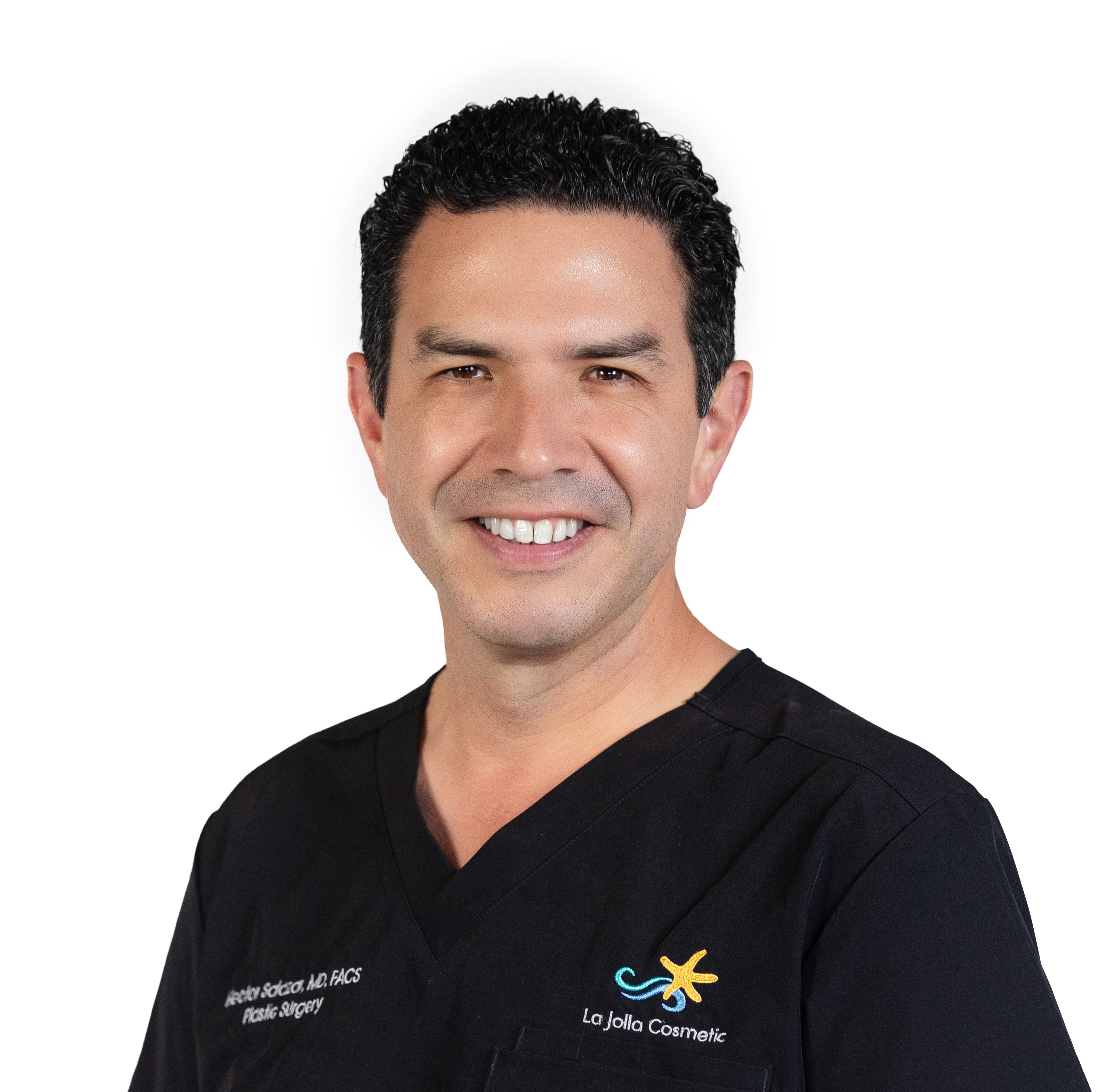
Plastic Surgeon
Having dedicated 17 years of his life to achieve the best medical training, Dr. Salazar’s philosophy is centered around providing beautiful results safely and ensuring each and every patient feels well cared for from their first appointment to their last.
In addition to being an American Board Certified Plastic Surgeon, Dr. Salazar is a member of the American Society for Aesthetic Plastic Surgery (ASAPS), a prestigious organization that is highly selective with its membership. Only plastic surgeons who demonstrate a high level of skill, experience, and expertise in aesthetic plastic surgery and cosmetic medicine are inducted into ASAPS.
Dr. Salazar is also a Fellow of the American College of Surgeons, an active member American Society of Plastic Surgeons, American Board of Plastic Surgery Maintenance of Certification Program, California Society of Plastic Surgeons, San Diego Plastic Surgery Society and the American Medical Association.

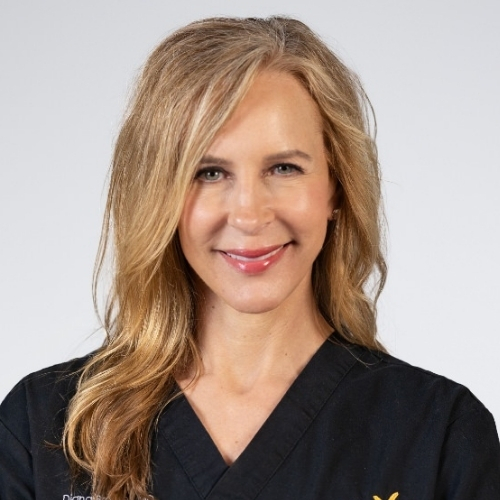
Plastic Surgeon
Practicing in a field that focuses on beauty and confidence for over 20 years, Dr. Diana Breister has become fluent in understanding the general self-image of women. Though she is skilled at several types of procedures, she is most known for her excellence in doing face and neck lifts, eyelid surgery, feminine rejuvenation, breast augmentation, breast lift, and tummy tucks. With a specialization in skin loss removal, she’s passionate about helping people who have lost weight become less self-conscious about the loose skin left over.