


Around 48 to 72 hours after surgery, swelling peaks, the anesthesia haze lifts, and a lot of women look in the mirror and feel like they've made a mistake. Dr. Diana Breister has been in plastic surgery long enough to know that feeling almost never means what people think it means. Most of the time, it's not regret — it's chaos.
Dr. Breister, who came to La Jolla Cosmetic after years of reconstructive work at City of Hope, walks Monique through what's actually happening between day one and day fourteen. The first 48 hours are what she calls a “pink bubble” — anesthesia still on board, surgery behind you, mostly relief.
Then comes the crash: maximum swelling, pain pills affecting mood, a body shape that doesn't look like the final result yet, and the strange weight of doing nothing while everyone else is productive.
They get into the difference between regret and shock, why facelifts feel harder than mommy makeovers, the mean-girl moment that derailed a breast reduction recovery, and what to do when your partner isn't showing up.
Three words anchor the whole conversation: trust the process. Dr. Breister explains why she can promise, with 200% certainty, that the feeling will pass — and why the women who say “what did I do” at week one almost never remember saying it by year one.
Links
Meet San Diego plastic surgeon Dr. Diana Breister
Learn more about facelift surgery at LJCSC
Questions answered by this episode
- Why do I feel sad or emotional after plastic surgery?
- When does swelling peak after cosmetic surgery?
- Is it normal to regret plastic surgery in the first two weeks?
- What is post-surgery depression and how long does it last?
- Can anesthesia and pain medication change how I feel emotionally?
- Why does my face or body look so different right after surgery?
- How should a partner or family member support someone recovering from cosmetic surgery?
- Why do facelifts feel harder emotionally than other procedures?
- What are the biggest mistakes people make in the first two weeks of recovery?
- How do I tell the difference between normal swelling and a real problem?
About this podcast
Learn from the talented plastic surgeons inside La Jolla Cosmetic Surgery Centre, the 12x winner of the San Diego's Best Union-Tribune Readers Poll, global winner of the 2020 MyFaceMyBody Best Cosmetic/Plastic Surgery Practice, and the 2025 winner of Best Cosmetic Surgery Group in San Diego Magazine's Best of San Diego Awards.
Join hostess Monique Ramsey as she takes you inside LJCSC, where dreams become real. Featuring the unique expertise of San Diego's most loved plastic surgeons, this podcast covers the latest trends in aesthetic surgery, including breast augmentation, breast implant removal, tummy tuck, mommy makeover, labiaplasty, facelifts and rhinoplasty.
La Jolla Cosmetic Surgery Centre is located just off the I-5 San Diego Freeway at 9850 Genesee Ave, Suite 130 in the Ximed building on the Scripps Memorial Hospital campus.
To learn more, go to LJCSC.com or follow the team on Instagram @LJCSC
Watch the LJCSC Dream Team on YouTube @LaJollaCosmeticSurgeryCentre
The La Jolla Cosmetic Surgery Podcast is a production of The Axis: theaxis.io
Theme music: Busy People, SOOP
Announcer (00:00):
You're listening to The La Jolla Cosmetic Podcast with Monique Ramsey.
Monique Ramsey (00:05):
Welcome everyone to The La Jolla Cosmetic Podcast. I'm Monique Ramsey and we are going to talk today about regrets, psychological roller coasters of recovery and the things that happen in your brain, what's going on in your body. I have Dr. Diana Breister here with me to explore this topic. Welcome, Dr. Breister.
Dr. Breister (00:28):
Good morning. Happy to be here.
Monique Ramsey (00:30):
So there's a moment. It doesn't matter what surgery we're having. After elective surgery where the patient looks in the mirror, they see swelling, they see bruising, maybe they really hurt. Maybe it's hard to move, they can't laugh. Things are happening and they almost come to this like, "What did I do? " Moment. And it hits around maybe day three to five. So what's going on? Is there something happening to our brains or is there something happening in our bodies that kind of creates this weird feeling of regret? And when does that go away?
Dr. Breister (01:10):
So that's a very good question. There's a lot of talk about this and it's all very true. People think about plastic surgery. They dream about it for so long. They fantasize about it for so long. We all are, "Ooh, if I could only do this. " So a person gets to that point where all things are in order. They actually pull the trigger, they find the doctor they like, they're so excited. So they have the surgery and the first day or two they are kind of just happy they got through it, excited. They still have some anesthesia on board. And so we almost call it like a pink bubble or something. They're kind of on a little bit of a high. They've made it through the surgery. And then after about 48 to 72 hours, and this doesn't happen to everyone, but a lot of women it does.
(02:03):
48 to 72 hours swelling is maximal. So it's kind of jarring for them that, "Oh my gosh, am I going backwards now?" And so then they start feeling very self-conscious about that. They look in the mirror, they're bruised, they're swollen. They don't know what hit them and there can be a lot of sadness and remorse absolutely or just emotional disarray, if you will. They can also be on pain pills and that's very dysregulating to a lot of us, creates emotions, things like that that we're not expecting. So it's a combination of a lot of physiologic changes that your body just went through as well as psychological changes. So we do talk about that and we like to warn people because it is very normal. It's real and we see it and it hits people at different times, but the main thing is that we're here for you and we've seen it before and we can get you through it. That's really the big message.
Monique Ramsey (03:11):
Yeah. I made a mistake isn't really the truth. It's more just kind of a manifestation of all this other, like you said, kind of dysregulation, like everything's a little crazy in there. And you know what? It's interesting because as you and I have talked on many different podcasts and it seems like people in general just need to be more patient with themselves, right? Be patient with the healing in your brain, in your body, because you're going to go through a lot of changes, right? And I would think some of these medications do affect you in ways that you wouldn't expect.
Dr. Breister (03:49):
Absolutely. Absolutely. They all have an effect on our brain and there's just a heck of a lot going on. But one thing that I do see on the internet a lot in a lot of social media and I have to stand behind it. It's true. It's three words, trust the process. And I see women going through that online and there's a lot of women that post their whole journey online and bless their hearts because I think that helps other women. But one of the overriding messages is trust the process. And that is very, very true. Trust your surgeon, trust the process, know it's going to be long, prepare for it. I think the more preparation you can do for that is the better. And a surgeon needs to be very honest with you too. Look, by day four, you're not going to be running around going back to things.
(04:43):
You've got to be really honest with patients in how long this is really going to take. And for different surgeries, it's different times. Facelifts are one thing, mommy makeovers are another. So yeah, it's about education and just preparing.
Monique Ramsey (05:00):
And I think as a patient, having those expectations knowing before you go there and I think that our litle pre-op visit with the nurse and our booklet helps a little bit to get in the right mind frame of if you know what to expect, you're not going to freak out when it's happening. If you, "Oh yeah, they said it would be like this. They said day three, I was going to have more swelling and bruising or something." They said that. Then it's like, "Okay, I can calm down. I can back off. I don't need to go to Dr. Google and see what's happening or to ChatGPT."
Dr. Breister (05:36):
And that thing too though, you have to take that with a grain of salt too because we all say we think we understand. We've all been there like, "Oh yeah, I get it. I understand." But once you're in it, you're in it. And sometimes even though you've done the best preparation you can, you're feeling it now and it's different. That's true. It's different than you imagined. But that being said, preparation is all you can do. But I think the other thing is it's really important to reach out to your doctor when you're feeling like that. It's really important because we can inevitably always talk you off the ledge. I can always calm a patient down. And I think that that validation and being heard is the most important thing. So I mean, I encourage anyone who feels like that to lean on us, us, our team, we're here.
(06:29):
There's been many times I've had to look a patient in the eye and say, "Listen, you are going to be absolutely fine. And I can tell you that with 200% certainty." And that can calm them down. It really does. I tell them, "Listen, I've been doing this for 20 years." And I say, "When you go home, if you're feeling like this tomorrow, call me. I'll talk you through it again because it takes sometimes multiple conversations to get them through."
Monique Ramsey (06:56):
Yeah. Now you come to La Jolla Cosmetic, you have a lot of background behind you in terms of surgery and some reconstructive surgery with the City of Hope. And in that reconstructive surgery, you're restoring something that had been lost. Does your background change how you read a cosmetic patient's emotional response to recovery?
Dr. Breister (07:21):
Well, I think it helps tremendously because what I had been dealing with is women on the first part going through emotional stress. The lead up to having breast cancer, the devastation they're feeling, the intense emotional fear they have. So I am used to being somewhat semi-psychologist for women and I got really used to that by dealing with women going through breast cancer, which is beyond our nightmares. But I found that I could be a tremendous support and I found that I had to make those appointments a little longer and just let them talk and really let them vent because in their process of breast cancer, they are seeing an oncologist, a radiologist, sometimes the breast surgeon, and there's no one that really listens to them. So I found that oftentimes it was a real wonderful thing that I could just sit with them longer, hear them out, reassure them.
(08:35):
So that gave me a lot of emotional intelligence, if you will, to be able to read women's vibes. I know when someone's feeling kind of scared or terrified in a way and I can calm them down. So getting women through that breast cancer process is so intensely emotional that I know that getting women through a cosmetic surgery, I can handle it, I can do it and I can be there for them.
Monique Ramsey (09:03):
So what's the difference between regret and grief? Because some patients describe what they're describing sounds more like grief for maybe a version of themselves that they used to have a long time ago or before surgery even, or regret for the surgery, or is it all just kind of a manifestation from the chaos at day three?
Dr. Breister (09:26):
Early on, it's rare that you hear complete regret at that point. It's pretty extreme. And the grief is I think also maybe a little strong. Both those words are probably a little strong. I think it's more of a intense kind of a shock. It's more of a shock to what they kind of weren't expecting. Luckily, I don't get that. Oh my God, I'm not who I am. It's pretty rare, but there are moments of, oh my gosh, will I go back to what I see myself as? And I see that at three, four weeks sometimes, my face is still really swollen and it is somewhat swollen, but it goes back and I've never, ever had someone long-term be disappointed with how they look or how they feel. So it always works out.
Monique Ramsey (10:20):
It works out. It's like you said trust the process.
Dr. Breister (10:23):
Trust the process.
Monique Ramsey (10:24):
And you're really, I feel like a listening first surgeon. And in that first post-op visit, what are you listening for that someone might not realize that you're picking up on?
Dr. Breister (10:36):
Well, there's a whole lot of things. So in that first post-op visit, I'm evaluating what is their posture like? Okay, what are their eyes looking like? Do they look tired? Do they look fatigue? Do they look emotional? Do they look stressed out? Do they look like they're panicking? I can see all that within the first 20 seconds of walking into a room. So I immediately know what I have to hone in on. Obviously, I need to look at the result and make sure there's no bleeding, incisions look good, check. But then it's very much like, "Did you sleep last night?"
Monique Ramsey (11:08):
Yeah.
Dr. Breister (11:08):
"Did you eat anything?" And so I certainly get the history like, "Oh my God, I couldn't sleep at all last night." So right there, okay, let's stop.
Monique Ramsey (11:17):
Let's fix that.
Dr. Breister (11:18):
Let's fix that. What was it? Was it this? Was it that? A, B, "Are you not taking enough pain pills?" Are you taking the pain pill? Do you need the pain pill? Or did the pain pill upset you so much that you shouldn't take the pain pill? So there is a myriad of things that we are looking into far more than just, "Does the surgery look good? Okay, goodbye." It's like, how are they dealing with this emotionally? And some come in like, "Boom, hey, I'm good and I'm great." And that's fantastic. And some come in with their face is white, they're walking like this. And so those patients you really need to sit a little longer with and dissect what's going on just so you can provide them with a little more comfort and really sort out, do we need to change your pain pill? Do we need to-
Monique Ramsey (12:09):
Nausea.
Dr. Breister (12:10):
Yeah. Do we need to loosen up that bra a little more? Is it too tight on you? Sometimes just a dressing or a binder can be digging in in a horrible way and they don't know because they're just like, "I didn't want to touch anything and I didn't want it. " So you have to really look out for all those things and then really address it, fix it and see, "Hey, do I need to see this patient again tomorrow?" Or are they good for a couple days? And then maybe they need to check in with my nurse in a day or two. I say, "Michelle, you need to give them a call. See how that's doing. Did they get some sleep last night?" So I think all of those things are absolutely critical to making a patient's experience wonderful. It's not just what happens on the operating room table. I mean, that's a lot of it, but that whole post-op period is critical in making sure patients are getting through this.
Monique Ramsey (13:11):
I think it's important for ... I mean, you guys are looking for all those things, but as a patient, sometimes we're too shy or afraid of saying what's hurting. If you're like, "God, this really hurts." Maybe it is something digging in or it is that, "Oh, I feel so nauseous." And it's like feet up, cold pack on the back of your neck, this happened to me on a post-op visit, just getting to the center from home in the car, out of the car and I was ready to pass out and they're like, "Oh." And they snapped into action and it was like, "Oh, okay."
Dr. Breister (13:47):
Yep, they can see that.
Monique Ramsey (13:49):
Yeah. Yeah. So it's like not being afraid to say, "This is really hurting," Or, "I can't get comfortable." I feel like that is something that people are always saying because you're inevitably sleeping in a way that you weren't before surgery.
Dr. Breister (14:05):
Absolutely. Absolutely. And I try to be very compassionate in that, in that like, okay, well, let's see if you could just rotate your hips a little and put a pillow there and do that because those little changes can make all the difference. It's not so dogmatic like you have to do that and that's it. There's some wiggle room if someone's careful with what they do. So you can really make a patient feel a lot better even on that post-op day one. A lot of times patients, like you said, don't want to reveal anything. They're very either stoic or shy or just don't want to complain. But usually I get to the bottom of it no matter what. I'll say, "Something's bothering you. Something's going on. " You can suss it out. "What's going on? You can tell me. You can tell me.
Monique Ramsey (14:52):
Yeah, no, and it's important to do that because you guys can't help if we're not telling you what's happening. I think while you're in the office, use those resources that you've got around you. So patients often say the swelling or the unfamiliar shape of their face or their body at about a week, that can sort of trigger panic.
Dr. Breister (15:15):
Absolutely.
Monique Ramsey (15:16):
How do you walk them through what swelling versus what their actual results is going to be?
Dr. Breister (15:22):
Every person's going to have a different amount of swelling. We've seen every amount of swelling from a little bit to a lot and just being able to say to them," Yes, you are swollen, but you are not going to be like this forever is really the way I was there on the table. I know what it looks like without the swelling. I saw it with my own eyes. So it's not going to be like this. This is a manifestation of swelling. In some cases, swelling is a little more than we expect. And in those cases, sometimes we'll put patients on a steroid dose pack, which can be very helpful for swelling. I don't automatically do it, but some people I will do it. But I think it's just the history of 20 years of experience and just they have to trust me and that usually goes a long way that I can, like I said, I can tell you with 200% certainty this is going to go away.
Monique Ramsey (16:18):
I think as patients, especially we've wanted something for so long, we finally pulled the trigger, we finally did it. Now we're at home and we're obsessing about every little thing.
Dr. Breister (16:29):
Yes. Looking in the mirror.
Monique Ramsey (16:30):
Stoplooking because of course you've got nothing else to do.
Dr. Breister (16:34):
And they're curious. They're curious, how did this all happen and what is this? And that can be the kiss of death.
Monique Ramsey (16:41):
I think the asymmetry, people don't realize our bodies are in our faces. Everything's pretty asymmetrical.
Dr. Breister (16:48):
Exactly.
Monique Ramsey (16:49):
But we don't think about it prior to surgery. After surgery, we're like, wait, this ear is this one. And it's like this micro focus that it's like find yourself a really good podcast that's a murder mystery or something and get yourself-
Dr. Breister (17:07):
Yeah, don't look in the mirror, away from the mirror.
Monique Ramsey (17:09):
Do something different just to help get your mind off of it.
Dr. Breister (17:13):
Yeah, that does no good to micromanage it. It's just the kiss of death because also not only do we have asymmetries that exist that different eye will swell totally different than the other eye. Just by nature of little blood vessels or things like that, you may get a complete different healing route on the left breast versus the right. And we know that because we've seen it hundreds of times, but they haven't. So they think, "Oh my God, something is wrong with this left breast." And you say, "You know what? It's not really anything's wrong with your left breast. Your right breast is just doing great, doing better." It's an overachiever. Yeah, that one's normal. So yeah, it's a lot of reassurance.
Monique Ramsey (17:59):
Do you find that there's specific procedures, because you do facelifts and all kinds of facial rejuvenation next tummy tucks, mommy makeovers, labioplasty, there's so many different procedures that you do. And do you find that any of them might be more of an emotional rollercoaster than the other ones? Is there anything harder?
Dr. Breister (18:20):
Definitely, definitely face. Facelifts are definitely harder than mommy makeovers and that's because it is your face. I mean, a mommy makeover, you can hide it for many months. You don't even have to look at it yourself, but your own face is hard to avoid. That's true. So there is, I would say, a much heightened level of anxiety sometimes with facelifts that you just have to be real patient because you do look so different initially. You look so different. The swelling, the pulling, all that stuff just looks ... It's kind of scary. It can be. Let's be honest. It's going to look funny or weird. At least in those first couple days, tight, swollen, a little distorted, a little this. We know that, but it is hard for the patient to take even though they're prepared for it too. It takes a lot of handholding on that front.
Monique Ramsey (19:21):
Is there a personality type or a season of life where you almost know that that patient might have a harder recovery than others?
Dr. Breister (19:31):
I wouldn't say a season of life. I would say more of a personality type. People who are just a little more anxious in general are going to have a little harder time than people who are kind of more relaxed and carefree. And we all know people like that. Some people are just a little higher anxiety about everything and that can come in a younger lady or an older lady and vice versa. I've seen people just sail through a facelift like it was nothing, like it was getting a ice cream cone. I've got one now. I mean, she had a facelift, a full face laser and her face was literally crumbling and melting off and I'm like, "How are you? " She's like, "I'm good. I'm really good. I'm great. I'm good. I'm doing good." And every time she comes in, she's like that and that's just her personality or her pain tolerance. And then there's other people that just would be freaking out and panicking in that and neither is right or wrong. It's just your personality.
Monique Ramsey (20:37):
All right, let's get into a really hard conversation for some people. Let's talk about the role of a person who's around the patient, the partner, the mom, the friend. Have you ever seen where recoveries might be derailed by somebody who's not being exactly supportive?
Dr. Breister (20:57):
Absolutely. Absolutely. Yeah, that can be really stressful for the patient to say the least. I've seen patients come in and for whatever reason the husband is not as on board or emotionally supportive as he could be and he's left them alone for a couple of hours and they're very distraught and they are just ... And it's hard because we can't really demand that that husband pay more attention to her, but we have to be very delicate about those things. So that can be super hard. And so we always try to encourage people to find the most supportive care for them. Hopefully they know a little bit that, "Oh, my daughter is going to be really great in this role. She'll be better than my husband because he doesn't like blood and stuff," or whatever it is. So it's really good to find that person that you know is going to be there for you and not too squeamish or not too judgmental, if you will.
(21:57):
I've also had situations where a woman had a breast reduction and she really wanted the breast reduction and she was quite large and we left her and she looked beautiful. She was still a D and I think her sisters commented like, "Oh my gosh, you are flat now." And she was crying, distraught. My sisters told me I looked horrible and I was flat now. And I said, "Oh my gosh, those girls are just jealous mean girls. I'm sorry, but that's not right." You can't sit with us.
(22:31):
You have beautiful breasts right now, but yes, family members can be both ways. Now, luckily she had the most lovely, unbelievable, supportive husband you'd ever dream for. He was there at every appointment and with her. So it just takes finding that person that you know is going to be the most compassionate.
Monique Ramsey (22:52):
So at the one-year mark, do those patients who maybe said, "What have I done?" Do they even remember that? Do they remember that feeling of like-
Dr. Breister (23:03):
Usually not. Usually not. It's usually a blur. It's a blur. It's kind of like childbirth. When you're in it, you're like, "Oh my God, never again." But once you're out of it and you have your baby or your beautiful face, you're excited. A lot of times they're thinking, "What else can I do now?"
Monique Ramsey (23:20):
What's the biggest mistake that patients make maybe in the first two weeks that makes the emotional side worse? So maybe it's the mirror focusing or the scale or social media or comparison photos.What are the things that people might be doing to themselves even unintentionally?
Dr. Breister (23:38):
All of the above. Everything you said. I mean, we've seen that all. Some people are compulsive weighing on the scale and we all know that after surgery, your body's retaining fluid, you're going to be pounds heavier than you were. Some people get caught up in that and that's not good. Some people get caught up in looking in the mirror too much and that's not good either. You have to trust the process and know that things are going to take a while before they look better. The biggest setback is overactivity. It can really destroy results and some people just can't help themselves. They're so type A and they so think that they can get away with stuff and many times people might, but a lot of times they don't and they wind up either with a seroma or a little blood clot or an incision that has opened up that can lead to an infection.
(24:31):
And it really can be hard with some people just to tell them, "Look, you cannot just go on even though you feel good. Your body is not caught up with you. So you can't do all those errands and clean your house and make the Thanksgiving dinner because I've seen it happen and it has backfired tremendously." So that's really something I want to stress in that post-op period is just please listen to your doctor. Don't do the things that you think you can get away with. Just lay on the couch and watch Netflix because that is what it requires to let the body heal.
Monique Ramsey (25:12):
Yeah, go down with just relax. And it's hard because I think a lot of us, even if you go to your post-op visit and they say, "You're doing great." And you go home, you're like, "I'm doing great." So that means that they said, "I'm doing great. So now I can go do whatever. I can clean the office."
Dr. Breister (25:33):
Back to that post procedure depression, part of that is us not feeling productive in who we are. Many of us, probably all of us gain worth by what we do on a daily basis. That's how we feel good about ourselves. We take care of people, we do this, we do that, we did it, we check off our list. So in that post-op period, you're sitting there and you start to feel worthless. I see that a lot. It can be very burdensome to people, throw people into depression. In fact, one of my really close friends, I didn't do surgery on her, but she had a tummy tuck many years ago and she spiraled into a terrible depression after her tummy tuck. Her recovery was a little elongated for various reasons, but she really spiraled into a terrible depression, just feeling so useless.
(26:32):
She just said, "I'm useless right now." And I'm like, "Listen, you've got to reframe it. Please don't take it like that. " But yeah, it's an emotional component too, just sitting and doing nothing. So you really have to find some activities that make you feel like you're doing something, but you're not sorting out that photo album that go through the stack of photos that's been sitting there in your closet for 20 years.
Monique Ramsey (26:57):
Just don't lift the box.
Dr. Breister (26:58):
Do a puzzle. Don't lift the box. Don't lift the box. Do a puzzle. I don't know what it is, but it can't be vacuuming and cleaning and shopping.
Monique Ramsey (27:07):
Right. All right. So if somebody's listening right now and they're on day three or four or five and they feel like, "Oh my God, what do I do? " What would you want them to hear?
Dr. Breister (27:18):
I want them to hear that I promise you this is all going to blow over. You have to trust the process. You have to have faith. You have to have faith, you have to have patience and you have to trust that the body takes a while to heal. It doesn't happen overnight and you can't really speed it up. So it's more like take a deep breath, do some meditation, call your doctor 20 times if you have to, to get that reassurance, go see the doctor every day if that's what you need to hear, but get some feedback, get some validation and just know that you're going to be fine.
Monique Ramsey (27:55):
Yeah. And I would say don't compare yourself to other people.
Dr. Breister (27:59):
That's true. That's true.
Monique Ramsey (28:01):
I'm one of those people, and I know this about myself is it's going to go wrong. It's going to go wrong with me. It's going to take longer. My body hyper reacts to things. Okay.
Dr. Breister (28:10):
Expected.
Monique Ramsey (28:11):
Right. And if I'm watching Instagram and somebody is like bouncing around on day three and they're like, "I feel great and I don't feel great." That's not because something's wrong with the surgery. That's because my body takes longer and you might be a quick healer. Awesome. But it's done.
Dr. Breister (28:28):
Yeah, you might be prolonged. Yeah.
Monique Ramsey (28:30):
Yeah. Don't compare yourself to other people because it is easy to do.
Dr. Breister (28:35):
Give yourself grace. Grace, grace. Great. It's not easy to do, but we all have to learn it.
Monique Ramsey (28:41):
Yeah. All right. Well, thanks Dr. Breister. This was super enlightening. I think nobody really talks about this and this psychological and emotional rollercoaster. So I'm glad we were able to sit down today and hash it out.
Dr. Breister (28:56):
Me too. I really hope some people can learn some things on this one. Yeah, it's a lot what happens after you get off that operating room table that affects everything. So I'm glad that we had this conversation.
Monique Ramsey (29:10):
Yeah. Well, thanks everybody for listening or watching and we'll see you on the next one. Bye.
Dr. Breister (29:14):
Bye.
Announcer (29:19):
Take a screenshot of this podcast episode with your phone and show it at your consultation or appointment or mention the promo code PODCAST to receive $25 off any service or product of $50 or more at La Jolla Cosmetic. La Jolla Cosmetic is located just off the I- 5 San Diego Freeway in the XiMed Building on the Scripps Memorial Hospital campus. To learn more, go to ljcsc.com or follow the team on Instagram @LJCSC. The La Jolla Cosmetic Podcast is a production of The Axis, T-H-E-A-X-I-S.io.
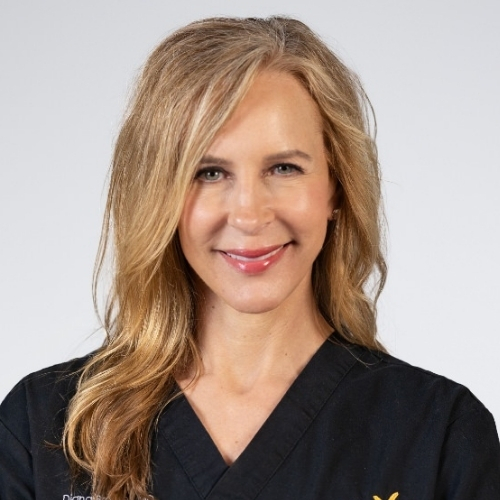
Plastic Surgeon
Practicing in a field that focuses on beauty and confidence for over 20 years, Dr. Diana Breister has become fluent in understanding the general self-image of women. Though she is skilled at several types of procedures, she is most known for her excellence in doing face and neck lifts, eyelid surgery, feminine rejuvenation, breast augmentation, breast lift, and tummy tucks. With a specialization in skin loss removal, she’s passionate about helping people who have lost weight become less self-conscious about the loose skin left over.