




Why does breast implant removal sometimes cost as much—or more—than getting implants in the first place? It sounds backwards… until you hear what actually goes into explant surgery.
Explant surgery isn’t just about removing implants; it’s often about correcting the changes implants cause over time. While simple removal can be straightforward, adding capsule removal requires far more precision and time.
San Diego plastic surgeon Dr. Luke Swistun explains what happens to the breasts after implants are removed and why removal alone doesn’t always deliver the look women want. Hear how lifts, auto-augmentation, and fat transfer can help restore shape using your own tissue.
Dr. Swistun walks through how to think about long-term goals, costs, and recovery, and why doing it right the first time can mean fewer surgeries down the road.
Links
Meet San Diego explant surgeon Dr. Luke Swistun
View cosmetic surgery prices and before and after photos at La Jolla Cosmetic Surgery Centre
Listen to our previous episode, Fuller Breasts Using Your Own Tissue? Auto-Augmentation
Explained
Listen to our previous episode, What Really Happens to Your Breasts After Implant Removal
Listen to our previous episode, “Holistic” Explant Surgery: Buzzword or Reality?
Learn from the talented plastic surgeons inside La Jolla Cosmetic Surgery Centre, the 12x winner of the San Diego’s Best Union-Tribune Readers Poll, global winner of the 2020 MyFaceMyBody Best Cosmetic/Plastic Surgery Practice, and the 2025 winner of Best Cosmetic Surgery Group in San Diego Magazine’s Best of San Diego Awards.
Join hostess Monique Ramsey as she takes you inside LJCSC, where dreams become real. Featuring the unique expertise of San Diego’s most loved plastic surgeons, this podcast covers the latest trends in aesthetic surgery, including breast augmentation, breast implant removal, tummy tuck, mommy makeover, labiaplasty, facelifts and rhinoplasty.
La Jolla Cosmetic Surgery Centre is located just off the I-5 San Diego Freeway at 9850 Genesee Ave, Suite 130 in the Ximed building on the Scripps Memorial Hospital campus.
To learn more, go to LJCSC.com or follow the team on Instagram @LJCSC
Watch the LJCSC Dream Team on YouTube @LaJollaCosmeticSurgeryCentre
The La Jolla Cosmetic Surgery Podcast is a production of The Axis: theaxis.io
Theme music: Busy People, SOOP
Announcer (00:00):
You're listening to The La Jolla Cosmetic Podcast with Monique Ramsey.
Dr. Swistun (00:05):
Let's talk about one of the most common questions that we get. Why does explant cost nearly as much or more than getting the implants in the first place and shouldn't taking them out be simpler and cheaper? That's logical thinking, right? But here's the thing, when you're talking about explan surgery, you're investing in not just the removal. It's a lot of times fixing what time and implants have changed in the first place. So today we have Dr. Luke Swistun who patients give him a rating of 4.9 out of five. I don't know where that extra 0.1 is. I personally would give him five, but we'll give him 4.9 out of five and is our breast implant removal specialist. And he's here to explain why explan surgery is far more intricate than people realize. So welcome back Dr. Swistun.
(00:58):
Thank you very much, Monique. Thanks for having me.
Monique Ramsey (01:00):
So women here that explant surgery is more expensive than getting the implants. Is that really true?
Dr. Swistun (01:06):
Well, it's a complicated question. The answer is yes and no. And I'll start with a no first. So just to get the implant out and do nothing else is actually very inexpensive. That can be done under local. A patient does not even have to go under general anesthesia for that. We can just numb up the area, the little skin incision through which the implant was placed, and we can go through that area and remove the implant and then close that and call it a day. And that is, again, a very quick procedure. The problem is though, that that's all it does is it just removes the implant, but it doesn't really deal with the sequela of that, of having the implant for a while. So first of all, as everyone knows, the implant or any foreign object that is put inside of a human body creates scar tissue around itself, which we call a capsule.
(01:50):
This is true for pacemakers, artificial joints, shrapnel, breast implants, whatever. The body just basically walls off that object just as a way of protecting itself to some extent. And that capsule just now becomes a part of the body. It's a scar tissue that the patient wasn't born with, but it's there as a consequence of having a foreign object inside. And there are certain arguments whether or not that capsule should be removed as well. And that's a whole other conversation that we can have on a different podcast. But suffice to say, a lot of patients would like that capsule removed as well. And that is what makes it a lot more complicated now because that capsule is adherent to everything that implant has ever been in contact with initially. So if you think about a breast implant, those have a pretty large footprint on the patient's chest.
(02:35):
They're right on top of the ribs, like four or five ribs. They're underneath the pectoralis major muscle underneath the bottom of the breast and on top of the pectoralis minor, which is off to the side there. And all of those are now covered in this capsule. So if a patient really insists on just being brought back to factory settings, which is a term I hear a lot and wants everything out, including the implant and the capsule, now we to be very careful negotiating the capsule off of all those structures without causing a lot of collateral damage. And that's the part that takes a lot more time. That's the part that actually usually requires a longer incision, and that's also a part that we cannot do under local right away. If you just want to deal with the sequela of having an implant and nothing else, getting the implant out and the capsule out, that already puts us in a category where it's a lot more complicated than just putting an implant in.
(03:27):
The bigger issue that comes up afterwards is now after we remove the implant and the capsule, then the patient is back to square one. They're basically back to the shape of the breast that they started off with that prompted them to get the implant in the first place. For whatever reason, they're not really happy with it. And that's the best case scenario. Sometimes that implant can actually have caused a little bit more changes, unfavorable changes to the breast itself. For instance, if somebody had very large implants, then the skin has grown around those implants, and now if that implant is removed, then the patient has more redundant skin, more loose skin, and that's going to make the breast saggier. So now we have to figure out a way to make the breasts look better or more favorable or whatever the patient's prefers without an implant.
(04:13):
So that is an extra level of challenge on top of what we already were dealing with in the first place. Once that implant is not an option anymore, every other choice after that becomes a lot more complicated. We're talking about breast lifts, which makes, takes the breast apart and puts it back together in a different configuration. We're talking about auto augmentations, which is taking the patient's tissue from the bottom of the breast and repositioning higher. We're talking about fat grafting and all these other procedures that are a lot more involved, a lot more time consuming, obviously. And as we know, time in the operating room is money.
Monique Ramsey (04:48):
And so to let everybody know in the audience, so the basic, let's just call it the basic removal of a breast implant ranges somewhere between 6,700 to 11,000 and a primary breast augmentation is 8,400 to 9,800. So taking that implant out is right around that same cost. But then what you're talking about, if, if the patient wants to take out that capsule that's a capsulectomy, then that's going to involve more time, like you said. And the ectomy, does that mean you're removing? Is that what That part of that word?
Dr. Swistun (05:29):
Correct. Yeah. Capsulectomy means removing the capsule and there's extensive that. There's some surgeons that will do it through the small incision and perhaps they'll just remove the portion of it that is symptomatic and leave a lot of it behind. And then there's some surgeons that will remove the entire capsule. And then when the entire capsule is removed, then there's a whole other realm of how precise you are with removing that capsule and minimizing the collateral damage to the remaining breast structures. The less damage we cause, the more breast tissue we have to work with, the more function we're going to have. But that is another level of precision. That's something that is sort of my standard. This is why a lot of patients see me for this procedure, but it does require a longer incision, a lot more time.
Monique Ramsey (06:12):
And why would some women want or need their capsule removed and others might not care about it?
Dr. Swistun (06:20):
Well, the obvious answer is if there's a capsular complication, for instance, the capsular contracture is by far the most common complication where the capsule gets very hard and stiff becomes very hard. Scar tissue, which is very symptomatic, palpable, patients can feel it. It actually restricts range of motion, and that's an obviously indication to remove it. The capsule can also be pulling in very thin patients. It can cause traction on nerves and cause each kind of phantom pain in certain areas, phantom itching or burning because it's close to a nerve. So sometimes removing that helps. Sometimes if a capsule is left behind, then there are some complications that can still happen down the line. They're very rare, but they can happen. And I've seen them. Sometimes the capsule can fill up with fluid and become a cyst and patients come back with a fluid filled, like a small seroma pocket that is symptomatic, especially on a very small breast that's left behind. Sometimes the capsule can contract your later. If you really dive into this. The FDA had reported 28 cases of squamous cell cancer that they found in latent capsules that was found much, much later. So that's a very rare, very rare complication. But for all those reasons, a lot of patients just want that peace of mind and say like, you know what? If I'm going to remove my implant, I just want everything associated with that implant to be removed as well,
Monique Ramsey (07:39):
And do it all at the same time and really kind of bite the bullet. And yeah, I think what you're bringing up where you could leave it in, it's more simple, but then maybe it won't even look as good if things are kind of pulling or stuck together. And then also that worry that later there could be some other thing that could happen. Out of 10 patients who want their implants removed, how many want the capsule ?
Dr. Swistun (08:07):
In my experience is very skewed because patients seek me out for implant capsule removal. For the most part, I would say in general, it's very different. I think there's a lot of surgeons that may not have this entire conversation with patients, and they may just take the slightly simpler route. And frankly, if a patient has a very soft capsule that is not symptomatic and they just want their implants out, then a lot of those patients will basically, the surgeon will say, yeah, you can just leave your capsule in. That's fine. And they sort of knowingly or unknowingly accept a very, very small risk of a complication down the line. Maybe 80 90% of the time nothing will happen and the patient will never even know that the capsule is left behind and they'll be fine for the rest of their lives. But in some small instances, that capsule can come back to haunt them later on. And in my patient population, lot of the patients have done their research and they have sort of made themselves aware of these rare but real things that can happen down the line. And for this reason, they come to me with the mindset of like, Hey, let's just get everything out and let's just do it the safest way possible.
Monique Ramsey (09:11):
Yeah. Now you mentioned that there's kind of two ways to remove that capsule, and I think that the nomenclature is just a standard capsule removal maybe, or total intact. Does that mean where you were talking about where you're really taking the whole thing?
Dr. Swistun (09:29):
Yeah, we had an entire podcast on this, so we can maybe put a link on there. But yeah, suffice to say, we can basically leave the capsule behind, which is basically no, sometimes we release the capsule in certain areas, which will be a capsulotomy. So if there's one tight band on the capsule that is kind of restrictive, then you can just cut that band and it'll leave everything in. There's a partial capsulectomy, which would be removing portions of the capsule that are maybe symptomatic, maybe on the bottom of the breast that patients can feel, but under the muscle they can't feel it. So we leave that alone. And then there's a total capsulectomy, which basically removes the entire capsule. The total can be done in pieces or it can be done as a whole single unit, and that's what you're referring to is a total intact capsulectomy is sort of the more common surgery that I do. Is that where we remove the entire capsule with the implant still in there? Because in my technique, I can sort of use the implant to guide me where that capsule is and retract away from the healthy tissues. And actually that's how I sort of get around it with the least collateral damage possible. That's sort of my technique. And then there's the enbloc, which is the last sort of thing, which is basically a cancer related conversation. Like if somebody has ALCL implant caused ALCL or another cancer, that's when the enbloc term actually applies.
Monique Ramsey (10:48):
Removing this capsule in all those different ways you just mentioned, why does that change the complexity and the cost of the surgery so much?
Dr. Swistun (10:57):
Because it takes a lot more time, a lot more precision to get the implant out. You don't have to deal with the capsule. The implant's not usually stuck to anything. Sometimes the textured ones are a little bit, but even then you can just kind of unstuck 'em because it's almost like Velcro. But the capsule is really adherent to all these vascular structures that I named muscle bone, fascia, breast tissue, and all that stuff. So to get around that capsule without damaging those structures that stuck to is a different level of surgery, just an implant removal. Removing a foreign object out of a predetermined space is super simple. You can do that through a very small incision and just pull it out and close it and call it a day.
Monique Ramsey (11:37):
So it's far different than just putting the implants in and taking them out. What happens to the breasts after the implants are removed, and why does explant surgery alone maybe not leave women happy with what they're left with, if it's just the implant going out?
Dr. Swistun (11:57):
Well, obviously the women that have implants made the decision to put them in for some reason. So that reason is going to come back. And whether it is the breast was too small or whether it is the breast was saggy a little bit and I needed more volume to fill it after breastfeeding or after weight loss, but that reason comes back to haunt them. And sometimes they're sort of like, don't mind it anymore. A lot of patients accept that and it's like, well, it's going to be smaller, but you know what? It's me. It's natural. It's not a problem. But a lot of patients do want to optimize the shape afterwards because now that that implant is gone, the shape goes back to what it was. And that's actually the best case scenario. A lot of times, if the implant was there for 10, 20, 30 years, or if the implant was very large, obviously there's 10, 20, 30 years of aging that has also affected that breast over that timeframe. So maybe the skin is even looser, maybe the breast footprint is even lower. The nipple has descended even more. And now where that implant is out, the breast looks a lot worse than when that implant was first being considered to be put in. Now we're dealing with all those sequelae.
Monique Ramsey (13:01):
Sequelae, What's that mean? Sorry.
Dr. Swistun (13:04):
And now we're dealing with all of those consequences of time and aging and stuff like that.
Monique Ramsey (13:09):
Got it.
Dr. Swistun (13:09):
So now the solutions to this problem are a lot more complicated because now we are restricted by volume because really the only way to add volume to a breast is implant or fat grafting. So if implant is off the table, we got to get into the more complex addition of volume, which is fat grafting, which involves liposuction from somewhere else on that patient, and then processing the fat and injecting the fat back into the breast. That's a much more complicated procedure. That's lengthier procedure or a lift, which is rearranging the breast tissue altogether with maybe augmentation, which is another tissue preservation techniques, basically gathering breast tissue from different places and rearranging it and stacking it on itself for better shape. All those are reconstructive techniques, and they're a lot more complex than just putting it for an object under a breast.
Monique Ramsey (14:00):
How should patients think about their goals before choosing an explan versus maybe an explant plus some of these reconstructive techniques? And what kinds of questions do you ask them to think about for that end result?
Dr. Swistun (14:15):
I suppose the goals are, well, first of all, I would be realistic about the outcome. So I think the biggest decision that patients make when they no longer want an implant is that they sort of want to stop the maintenance of having a foreign object. No implant is forever. The implants have a shelf life, which is shorter than the patient's lifespan. In almost all cases. I tell this to patients who are in their late seventies who are considering an implant because that implant realistically 10 or 15 years, it could rupture or even sooner, and then patient at 85 will be in that same situation. So the implant is not forever. And if you're willing to continue the maintenance and be willing to have another surgery down the line in your lifetime, then the implant may still be the option for you, assuming you didn't have any complications or assuming there's no other issues. I think a lot of patients that decide not to have an implant anymore are sort of just at the stage where, you know what? I'm going to accept a smaller volume, but I don't want that maintenance anymore. I'll be comfortable with either smaller volume or just better shape or whatever the goals are at that point. And then we discuss their options.
Monique Ramsey (15:19):
Like the auto augmentation, and we did a really, we've done so many good episodes with you, and you're in our top 10 all the time of things that people are really watching and listening to, and it's an important topic. And millions of women out there have breast implants. And so then there's got to be some percentage that might want them out. And what does that mean and what does that look like and what does that mean in terms of cost? What does that mean in terms of downtime and what they should be looking for and their goals? At the end, I want to be able to exercise or I want to be able to look amazing naked. Some people don't care what they look like naked other people do, and that's okay. And so kind of coming in with those questions when they come in for the consult.
Dr. Swistun (16:03):
One thing I wanted to point out that there's actually a trend with more and more information being available about implants having negative effects on patients' bodies long-term. A lot of patients early on are reaching for alternatives to breast augmentation away from implants. So I've had a lot of patients who basically came with an unfavorable breast shape, and we just did a breast lift with an auto augmentation right away, and it was a lot more expensive than putting an implant in, but that is the lasting result that doesn't require them to have another surgery in their lifetime. Fag grafting is another option where patients came in with their twenties and said, I don't really want an implant, but I do have some areas on my body that I would like to address with liposuction, and while we're there, why don't we just put that fat into my breasts? And then we sort of kill two birds with one stone. But more and more patients are making that decision to just have a natural, I suppose, breast augmentation that does not involve an implant. And that's a trend that I've been seeing up a lot.
Monique Ramsey (17:01):
Yeah. Well, I think some of us out there know how our bodies are. We know what's problematic, and some people are hyperreactive. I happen to be one of them. So when you know that it's like, yeah, you want to maybe be fuller in the breasts, but what's the trade-off if it's only an implant? If that's my only option, then it's like, well, okay, so I guess I just have to live with what I have. And what it sounds like you're saying is you don't have to live with that. There are other ways to accomplish the goal of a fuller breast with a natural augmentation, which I love,
Dr. Swistun (17:38):
And not just maybe the fuller breasts, but also just a more balanced contour. If somebody gets thinner somewhere else and is a modest augmentation with fat grafting, then that's a win-win, and they have a much more athletic figure without necessarily having too much value on top and they don't have to deal with an implant. Those options tend to be a little bit more expensive upfront, but then they pay off in the long term where you don't have to deal with a foreign object that you have to remove and replace again.
Monique Ramsey (18:03):
And I think if you look at, we have all our pricing ranges on our website, so you can go onto that page and we will put a link in the show notes. And for the patients out there thinking about this, one thing that we have always done in our practice is we have financing. So most people don't go plunk down $50,000 for a new car in cash. Most of us have some sort of financing and you have a monthly payment. And so it's like that's the same thing you can do here, and then it's a way to get what you really want and then just pay over time and not be feeling like, oh, I have to compromise, or I have to cut a corner to kind of get what I want, but not totally. And so that becomes a really popular way. We have a lot one in three almost patients use our financing, and you can get pre-qualified, so you can go on our financing page and you can see the different companies we work with. That's another thing as we're talking about cost, the patient coordinators can help you with figuring out what's the best way for you to make it work and keep it in your budget too, because that's part of this, not only the goal that you want and the right surgeon and the right experience, but also then how to make it comfortable to fit into your budget. So what are the biggest regrets you see when patients try to cut corners with explant surgery?
Dr. Swistun (19:28):
I guess it depends on, I don't know if anybody really wants to cut corners. I think what we do is we go over their options, but we don't burn any bridges. So a lot of times what we'll do is we will do less surgery because we know we can always do more. So for instance, a lot of patients decide to remove the implant and maybe the capsule and let the breast tissue settle because it's like, well, maybe it'll be good enough and maybe I don't need all those lift incisions and I'll be happy. If not, they can come back in six months and then we can do the lift afterwards if they decide that that doesn't work for them. And a lot of times that doesn't happen. Patients, once the breast settles down, they're like, oh yeah, I'm actually very comfortable with this no more.
(20:07):
Nothing else to do. And that's fine. The way I like to plan these conversations and these lifelong sort of intervention plans is that I don't like to burn any bridges in any situation. So we can go slowly and stop at any time if patient becomes comfortable at any given point or we can do more, we can do a lift, and if it's still not a great shape, but not enough volume, we can go back and liposuction and fat graft that lifted breast and then we'll get more volume in and the best shape and no implant. Yeah, I really don't have any patients with regrets, but I do have patients with alternative plans down the road.
Monique Ramsey (20:51):
Thank you, Dr. Swistun, because you really helped us wrap our heads around some of the reasons why, and I invite all our listeners to check the show notes because we have links to seeing the before and afters, seeing the price ranges, and we'll put a link in the show notes about some of our episodes that we've done with Dr. Swistun.
Dr. Swistun (21:39):
Thanks Monique. Thanks for having me again.
Monique Ramsey (21:41):
Okay. We'll see you all on the next one. Bye.
Announcer (21:48):
Take a screenshot of this podcast episode with your phone and show it at your consultation or appointment or mention the promo code PODCAST to receive $25 off any service or product of $50 or more at La Jolla Cosmetic. La Jolla Cosmetic is located just off the I-5 San Diego Freeway in the Ximed building on the Scripps Memorial Hospital campus. To learn more, go to ljcsc.com or follow the team on Instagram @LJCSC. The La Jolla Cosmetic Podcast is a production of The Axis, theaxis.io.
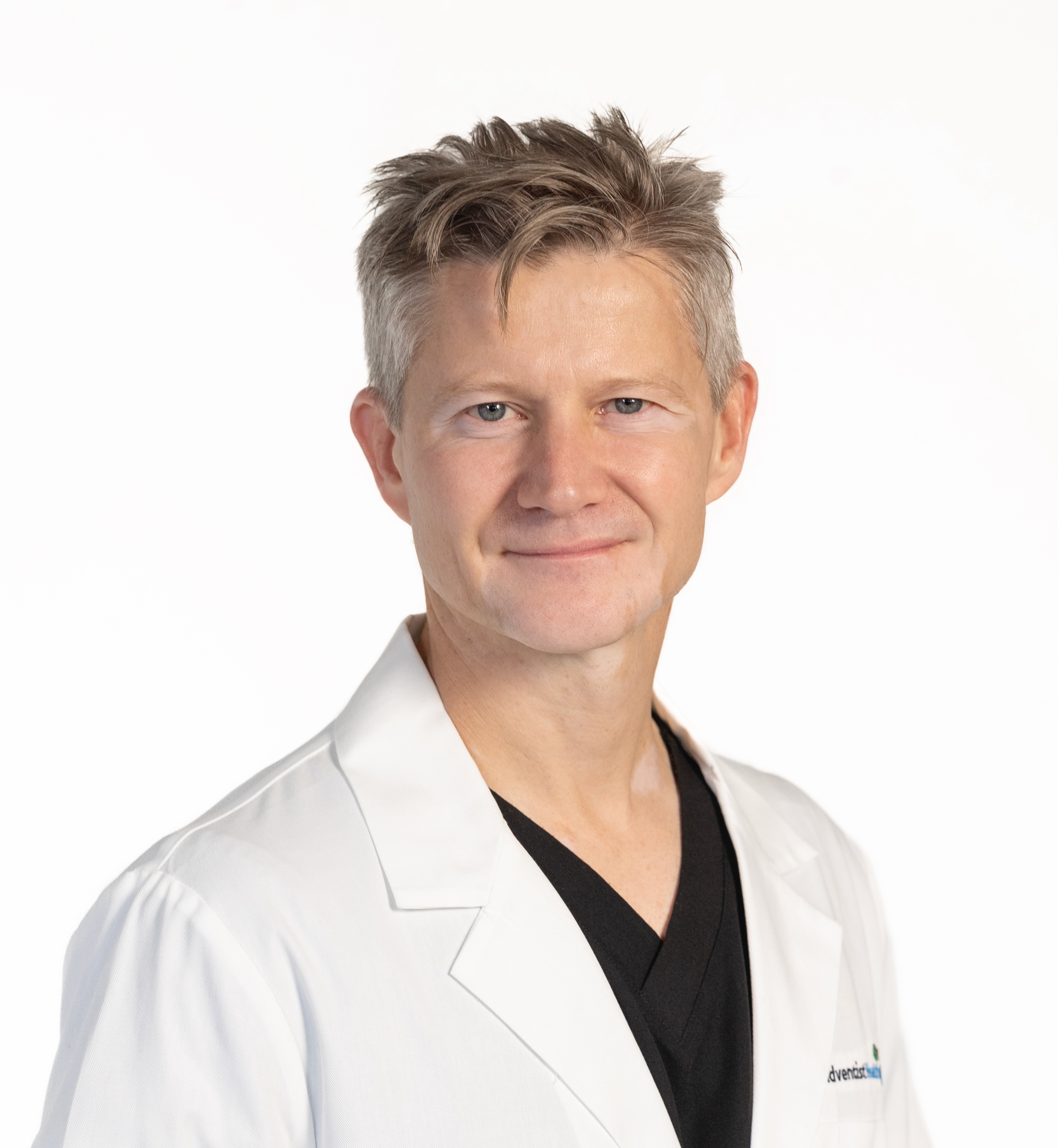
Plastic Surgeon
Dr. Luke Swistun is a board-certified plastic surgeon with a background in visual arts and medical military service. He’s known for his artistic approach to plastic surgery and for the close, supportive relationship he forms with every person he treats.
As a plastic surgeon, Dr. Swistun has years of general surgery and plastic surgery training. He attended medical school at the University of Illinois. He completed his general surgical training while in the navy and continued his Plastic and Reconstructive training at the University of Utah. After serving as a naval medical officer and deploying with the U.S. Marines during active conflicts, he completed his general surgery training, and subsequently focused on pursuing what he truly felt is his calling: reconstructive and plastic surgery.