


The deep plane facelift is quickly becoming one of the most sought-after procedures in facial rejuvenation—and for good reason. Unlike traditional facelifts, it repositions the deeper layers of the face, delivering natural-looking results that last a decade or longer.
Facial plastic surgeon Dr. Kiersten Riedler explains the ins and outs of this technique, from who it’s best for to what recovery looks like. Men and women often see changes in both the lower face and neck, so Dr. Riedler almost always includes a neck lift for the most balanced results.
She shares what to expect during recovery, including tips for keeping your head elevated, gentle skincare, and using makeup to conceal initial scars.
Links
Book a free 15-to-30-minute complimentary phone call with Dr. Riedler’s patient coordinator
Meet San Diego facial plastic surgeon Dr. Kiersten Riedler
Learn more about facelift surgery
Learn from the talented plastic surgeons inside La Jolla Cosmetic Surgery Centre, the 12x winner of the San Diego’s Best Union-Tribune Readers Poll, global winner of the 2020 MyFaceMyBody Best Cosmetic/Plastic Surgery Practice, and the 2025 winner of Best Cosmetic Surgery Group in San Diego Magazine’s Best of San Diego Awards.
Join hostess Monique Ramsey as she takes you inside LJCSC, where dreams become real. Featuring the unique expertise of San Diego’s most loved plastic surgeons, this podcast covers the latest trends in aesthetic surgery, including breast augmentation, breast implant removal, tummy tuck, mommy makeover, labiaplasty, facelifts and rhinoplasty.
La Jolla Cosmetic Surgery Centre is located just off the I-5 San Diego Freeway at 9850 Genesee Ave, Suite 130 in the Ximed building on the Scripps Memorial Hospital campus.
To learn more, go to LJCSC.com or follow the team on Instagram @LJCSC
Watch the LJCSC Dream Team on YouTube @LaJollaCosmeticSurgeryCentre
The La Jolla Cosmetic Surgery Podcast is a production of The Axis: theaxis.io
Theme music: Busy People, SOOP
Announcer (00:00):
You're listening to The La Jolla Cosmetic Podcast with Monique Ramsey.
Monique Ramsey (00:03):
You've probably heard about the buzz about deep plane facelifts thanks to Kris Jenner, but what actually makes them different. In this episode, facial plastic surgeon, Dr. Kiersten Riedler and I are going to lift the curtain literally on the technique that delivers this most natural and long-lasting result. Welcome back to the podcast, Dr. Riedler.
Dr. Riedler (00:29):
Thanks for having me.
Monique Ramsey (00:30):
Tell us just to get our bearings and get our footing. What are the different kinds of facelifts that are most common today?
Dr. Riedler (00:38):
So there's kind of the traditional also known as SMAS facelift, which lifts the superficial muscular layer by tightening or folding it. And then there's the deep plane facelift, which repositions the deeper facial structures as a unit for what I think is a more natural long lasting lift. And then there's mini facelifts which tend to just remove a little bit of skin. And then there's also neck lifts, which are often combined with any type of facelift.
Monique Ramsey (01:14):
Yeah. Now, the deep plane facelift, again, because Kris Jenner had very stunning results. And to think, okay, how is this woman 70 and looking like that? And of course, she's got a whole beauty regime around she has unlimited amounts of money and access to making herself look amazing. So that's the first caveat. But it did bring to the forefront kind of this other technique. And what makes it different really? What would you say? Is it that deeper layer that you're going deeper than a traditional facelift?
Dr. Riedler (01:50):
Yeah. So this SMAS, which is short for superficial musculo aponeurotic system is the super-
Monique Ramsey (02:00):
I can see why they use SMAS, they use SMAS instead of all the other that you just said.
Dr. Riedler (02:07):
It's like the superficial muscular layer of the face. And so a deep plane facelift goes under this mass and releases the key ligaments so that you can reposition everything kind of back to where it used to be. Whereas a traditional or SMAS facelift pulls or tightens the SMAS layer as opposed to releasing and repositioning it.
Monique Ramsey (02:34):
So I think if I understand it right, that that deep plane is going on a deeper layer, that makes sense. And you're actually detaching it from its source and moving it essentially to where it should be. Now, I've heard about ponytail lifts. And what I saw was that if you have your hair up in a high ponytail, everything's kind of coming up that direction. Is that a thing or is every facelift sort of pulling in that direction?
Dr. Riedler (03:04):
Every facelift generally aims to move what's fallen higher. The ponytail lift is unique in that it's endoscopic, it's small incisions. And then a scope like I use for nasal surgery or for endoscopic rat lift is used to see everything through small incisions. That's what makes a pony tail lift unique and people like it because this incisions are small. I do think that one limitation is that with small endoscopic incisions, it's hard to remove much skin.
Monique Ramsey (03:50):
Yeah. That's the trade off. Yeah.
Dr. Riedler (03:55):
So it's a little bit of trade off.
Monique Ramsey (03:56):
So if we're going back to the deep plane, you're trying to reposition things to where they were 20 years ago. Yeah, exactly. And is there a certain part of the face that a deep plane facelift would address better than a mass facelift or vice versa?
Dr. Riedler (04:16):
A deep plane facelift will address basically everything from the cheek down. So sagging cheeks, gels, nasally beautifuls, very net lines, and then the neck as well. It tends to like turn, if you have downturn mouth corners, it kind of helps turn those up. A SMAS facelift does, I would say a lot of those things, but tends to be less effective in really lifting the cheek and affecting the mouth corners, nasal labial folds and marionette area.
Monique Ramsey (04:54):
I mean, all that sounds really good. Most patients need all those things. By the time they're ready for a facelift, they really want that rejuvenated lower face, the gels, the neck, the jawline, and especially like you say, the marionette lines and even the mouth. How do you then deal with maybe the upper third of the face? Or are the incisions on a deep plane going up into like towards the eyebrow or the brow lift?
Dr. Riedler (05:21):
No. I mean, that would be ... Some people will refer to a facelift as involving kind of everything. Typically, I think these days, when we say a facelift or face and neck lift, it refers to the lower two thirds of the face and the neck. Whereas to rejuvenate the upper face, that would usually be a brow lift, upper blepharoplasty, lower blepharoplasty, those kind of procedures.
Monique Ramsey (05:49):
Okay. And so I'm assuming in some cases you want to combine those at the same time?
Dr. Riedler (05:54):
Yeah.
Monique Ramsey (05:55):
Yeah. And then do you ever have, within the deep plane facelift world, what kind of variations are made for individual patients or their anatomies or their needs, maybe their hairline even? If it's a man versus a woman, what are the different variations you can make?
Dr. Riedler (06:13):
Everybody's anatomy is actually very different. So no two face lifts are really the same at all. In the neck, there are different things that contribute to aging in the neck. Is it just skin laxity? Is it muscle bands that are kind of prominent? Is there excess fat? So deciding what you need to address and how. And then in the face, the kind of vector that you're repositioning tends to be fairly similar, but there is a little bit of a range, can be a little bit more towards vertical, a little bit more horizontal, but generally this direction. And then yeah, the incision. So for men, I'll always give them the option of whether they want the incision to be in front of the tragus, which is this part of the ear or behind.
Monique Ramsey (07:09):
The little bump?
Dr. Riedler (07:10):
Yeah.
Monique Ramsey (07:11):
Oh, I see. So it can be more in front of the ear or hidden behind.
Dr. Riedler (07:15):
Or hidden behind because if you have facial hair and the skin is moved, then you can grow facial hair.
Monique Ramsey (07:23):
I think you're going to have facial whiskers in your ear. Yeah. Well, okay, that's super interesting. So those incisions, are the incisions from where do they start and then where do they finish or does it depend on the patient?
Dr. Riedler (07:40):
It does depend a little bit on the patient just based on how much skin needs to be removed, but it starts kind of in this part of the hairline in the temple and then goes usually behind this part of the ear and then goes behind the ear here. So it's well concealed in kind of natural borders and curvature of the ear.
Monique Ramsey (08:07):
And is there any incision like back behind the hairline, like in the back of the neck or anything there?
Dr. Riedler (08:13):
Not in the back of the neck, just behind the ear and then-
Monique Ramsey (08:16):
Just behind the ear.
Dr. Riedler (08:17):
And then like along the hairline right here.
Monique Ramsey (08:20):
So that's pretty well hidden, I would think, for most people. I mean, there's always a trade-off, right? Yeah. So it's like people don't want scars, but they want this lifted appearance to look amazing. You're going to have some scars.
Dr. Riedler (08:33):
And then they're typically almost always doing neck lift with a deep plane face lift. And so that's just a little incision right down here.
Monique Ramsey (08:40):
Yeah, that little right under their chin. I always see that on actors and actresses because I know what to look for. I'm like, "I see what you've done. I've done it too."
Dr. Riedler (08:50):
A lot of people have scars here from childhood because little kids always fall on their chin. And so a lot of people actually have scars, non-surgical scars, just traumatic ones.
Monique Ramsey (08:59):
Right, right. So in terms of incisions and how long do they take to heal? Tell us about the recovery from a deep plane facelift. What is it all involved? I remember back in the '90s, Dr. Oleson took a class from somebody who was doing this subperiosteal face lift. Is that similar to this? So it was a very deep ... And you were going down and you were reattaching things to the bone, I think. I'm trying to ... It's been a long time, but is that similar? Because I do remember the patient he did it on, she came out gorgeous, but she was really swollen. It was a long recovery. So is that ...
Dr. Riedler (09:51):
That's a different technique because that goes under all the layers down to the bone, the sub periosteal facelift, which as far as I know, I think is not done all that commonly now.
Monique Ramsey (10:05):
I don't think he didn't do a lot of them. It was like her result was amazing, but then the trade off, most people, the downtime was far too much. And maybe it's sort of risky too. I don't know.
Dr. Riedler (10:15):
Yeah.
Monique Ramsey (10:17):
Yeah. Yeah. You don't hear about it anymore, so I'm assuming there's a reason, but what is the healing process like, what should they expect in terms of, okay, let's take it from having surgery to being able to walk around the block or go to a movie or go back to work, depending on what you do, and then maybe go to a wedding or be in the wedding.
Dr. Riedler (10:42):
Yeah, exactly.
Monique Ramsey (10:43):
What's that timeline?
Dr. Riedler (10:45):
So most people take two weeks off of work and like social events. Some people go back sooner. It kind of depends on whether they are okay with disclosing having that surgery. And I mean, you can walk around the block within days. By week three, you can kind of resume most of your normal activities and you're pretty comfortable being seen socially, not looking your best. We kind of say by week three, you can see your friends and by week four, you can see your enemies. Yeah.
Monique Ramsey (11:23):
I love that. Oh my gosh, that's so good.
Dr. Riedler (11:26):
Yeah. But I usually recommend if you're in a wedding or have a big event coming up, I usually recommend having surgery three months ahead of time, just to account for if you have swelling a little bit longer, just so you can really look your best.
Monique Ramsey (11:47):
Yeah. I think longer is always better. And do you find that makeup easily conceals some of the ... Because I think scars at the beginning are a little more pink than they will end up.
Dr. Riedler (11:59):
Yeah. They are pink in the beginning because of where they are, they're still pretty well hidden. I wouldn't say people need to necessarily put makeup on them. It's more just like swelling and like tightness in the beginning.
Monique Ramsey (12:16):
Now, do they go home with drains? Do they have drains in and the whole get up, the mummy with her earrings? Yeah.
Dr. Riedler (12:24):
So yes, exactly. So I mean, everybody does things differently, but I do the head wrap the first night and put a small drain on each side, and then I remove the drain the next morning and the head wrap.
Monique Ramsey (12:40):
So they don't feel like a mummy for long?
Dr. Riedler (12:42):
No.
Monique Ramsey (12:42):
Is it a painful procedure?
Dr. Riedler (12:45):
Most patients, and honestly I am kind of surprised by how little pain there is. It's more described as discomfort, feeling like swelling, discomfort, feeling tight.
Monique Ramsey (13:00):
Tight. Yeah. I would think that that kind of makes sense because everything has been tightened. Yeah. That's what you want. So who would you say is a good candidate for a deep plane facelift?
Dr. Riedler (13:13):
Anyone who is bothered by aging changes in the cheeks, lower face, neck, like gels, sagging cheeks, marionette lines, easily befolds, loss of like a defined neck and jawline, skin irregularities, muscle bands, all the lovely things that happen as we age.
Monique Ramsey (13:39):
So pretty much everybody's a good candidate at a certain age, right?
Dr. Riedler (13:42):
Yeah. Essentially.
Monique Ramsey (13:44):
Now, is it a long surgery? Does it take a long time in the OR?
Dr. Riedler (13:49):
It does take several hours, but patients usually wake up and bounce back pretty quickly. And I do give a medication before surgery to prevent nausea after surgery and that helps actually a lot because often that's-
Monique Ramsey (14:04):
I think that
Dr. Riedler (14:04):
Would be ... Yeah, often that's the most discomfort is nausea. And so if they don't have that, then they're in pretty good shape.
Monique Ramsey (14:13):
Yeah. So in terms of, if there's not a lot of pain, do they need a painkiller or is it more like Tylenol or how do you manage pain after?
Dr. Riedler (14:23):
Yeah, so that's a good question. So I do prescribe prescription pain medication just so everybody has it if they need it. I would say on average, people maybe take that for the first two days and then can switch to Tylenol.
Monique Ramsey (14:40):
Now, what would you say people need to either buy or prepare ahead of time for recovery like nesting. Nesting with your deep plane facelift.
Dr. Riedler (14:51):
So I mean, one of the important things after surgery is to keep your head elevated when you sleep. So like a wedge pillow or just extra pillows. I mean, if you have an adjustable bed, that's great. Or some people like to sleep in a recliner, just whatever's comfortable. Also, gentle skincare products, we give you to start before surgery, a skincare regimen that helps prep your skin for surgery. And then just everything that you need at home so that you can kind of hang out and be a little bit of a hermit for a week or so. Things to keep you busy without being super active. Audio books are good. Podcasts- Audio books. Listen to our podcast.
Monique Ramsey (15:41):
Yeah.
Dr. Riedler (15:41):
Yeah.
Monique Ramsey (15:42):
And especially if you've had your eyes done watching, like you think you might go, "Oh yeah, I'm going to go back and watch Real Housewives of whatever season four." But if your eyes are involved, maybe that's not going to be the easiest thing to do at the beginning.
Dr. Riedler (15:58):
Exactly.
Monique Ramsey (15:59):
Yeah. Podcasts. Yeah, listen to the whole ... We have over 200. Exactly. Now, would you say that the results of a deep plane facelift lasts longer than maybe more the traditional methods?
Dr. Riedler (16:12):
It's not so much how long a facelift lasts, but it's like how far back you set the clock. So for like a deep plane facelift, I usually tell patients it sets the clock back about 10 years. So you'll look 10 years younger and then the result doesn't go away ever, but you do continue to age. So you'll continue to age, but you'll probably age better than you would have. And if you want to never look like you've aged, then you might get a deep plane facelift every 10 years, but in reality, I mean, that would be uncommon.
Monique Ramsey (16:51):
Yeah. Well, I had my facelift and it wasn't a deep plane. It was just the traditional SMAS 20 years ago. I'm coming up on 21 years of it.
Dr. Riedler (17:00):
That's amazing.
Monique Ramsey (17:00):
And really now it's like, okay, I think we could have a refresh.
Dr. Riedler (17:04):
Yeah. So 20 years. Yeah.
Monique Ramsey (17:06):
Yeah. It did set the clock back and thank goodness for the med spa because then there's other little things you can do to help- Maintenance. In maintenance, right. But then it's like, okay, now I'm thinking, okay, I'm 57 and granted I had my facelift very early, but now it's like, okay, but if I want 30 more years out of something, I think I need to touch up. If somebody is in my boat where they had a traditional facelift in the past, would they be a candidate for this kind of facelift or would you need to do some other kind of tweak or would it depend on them?
Dr. Riedler (17:38):
I mean, having had a facelift in the past, it honestly doesn't have a big impact on having another facelift and what type it is, which is very different from rhinoplasty. I think revision rhinoplasty is kind of a whole different thing than primary rhinoplasty. But with facelifts, it's like everything kind of heals and sometimes it's actually easier to find the layers if you've had surgery before. Oh, interesting. But it's usually not necessarily more complicated or more difficult. And you can have a deep plane facelift if you've had a facelift before. Yeah.
Monique Ramsey (18:16):
Are you busy tomorrow?
Dr. Riedler (18:19):
Well, I'm in the med spa tomorrow.
Monique Ramsey (18:21):
Oh, man. Okay. Well, maybe I, because I do have a wedding, another wedding. I have two kids. I've had one wedding. Now my second wedding's coming in next year.
Dr. Riedler (18:30):
Oh, I didn't know that. That's exciting.
Monique Ramsey (18:31):
So maybe I'm going to have to get on your table and we can follow me through my-
Dr. Riedler (18:37):
Through your journey.
Monique Ramsey (18:38):
My facelift revision ... Not revision, because it's really secondary.
Dr. Riedler (18:42):
We call it a secondary.
Monique Ramsey (18:44):
Yeah. Secondary. Yeah. Okay. Well, let's talk about that. Exciting. So since we're all thinking about that, hello. Are there any specific risks or complications that people should know about with this type of facelift?
Dr. Riedler (18:59):
In general, the risks are ... I mean, they're pretty similar to other types of facelift. Theoretically, because you're in a deeper plane, you are closer to nerves, so you can have temporary nerve weakness, but studies have shown that it's actually not any more frequent and deep late facelift versus mass facelifts. And then the usual things like bleeding, infections, honestly, pretty rare. Temporary skin irregularities.
Monique Ramsey (19:28):
What do you mean by that? Temporary skin irregularity?
Dr. Riedler (19:30):
I feel like with everything, the two sides of the face will heal a little bit differently over time. So initially it's like maybe one side is a little bit more swollen than the other and it might fluctuate, but everything settles within ... Usually within a few weeks, everything looks pretty symmetric.
Monique Ramsey (19:48):
Yeah. And I think patients have to remember to let the body do its job.
Dr. Riedler (19:53):
Yeah, exactly.
Monique Ramsey (19:53):
And it's really hard because you've gone through this big thing and you've paid all this money, you've gone through this big event and you're at home and you've got nothing to do.
Dr. Riedler (20:05):
Except for stare at yourself.
Monique Ramsey (20:06):
And you're looking at yourself in the mirror and like every little thing that may have been there before in terms of facial asymmetry. I mean, we're all pretty asymmetrical, even our bodies are. So people don't even know that until after surgery and they're like, "But why is this cheek?" Well, it was that way before. So it's sort of like you have your limitations on what you can fix, right? But I think the patients have to try to step back a minute and say, "Okay, just trust the process." Exactly. And because within a few weeks, everything can change. And from what I remember, everything felt, I don't know, I say tight, but tight is part of the word, but almost like the skin is more taut, maybe it's more puffy and it kind of got softer and more normal as I healed, where it's like it was kind of-
Dr. Riedler (20:55):
It feels kind of firm initially.
Monique Ramsey (20:58):
That's the word. Yeah. And then it was like, oh, okay, now I feel like it's feeling like a normal face would, and that just takes some time. But people when they're looking at you, can't really tell. I was at a wedding, I have pictures of it. I was at a wedding and it was like 10 days after surgery. Wow. They didn't know. Yeah. They didn't know. And I had my hair in front of anything that was pink. I even had a hematoma, so then that is when you bleed. And the reason I had it is because I couldn't stop throwing up.
(21:30):
Because it was a post anesthesia thing. So I came back in and I'm all wrapped up the next day, wrapped up like the mummy and the drains and Ruth, who's still with us, she's in our OR, Ruth says, "Did you get a chin implant?" And I'm like, "What? No. No." She goes, "You chinthis ... " And they unwrapped me and they're like, "Oh." And I was throwing up so much that I broke a little vessel. So I had this all purple thing by my ear on one side, but I had lymphatic drainage massage because I was all puffy and then got me into wedding guest acceptability and nobody knew. So it was like even with a complication that wasn't a long-term problem, but even with that, people don't know. They really don't. You're more aware of it, I think.
Dr. Riedler (22:21):
Yeah, definitely. You're more focused on it and aware of it
Monique Ramsey (22:24):
I think that whole friends and enemies thing is perfect. So if you're talking about a facelift, like a date plan, and I know you don't do the money part, the patient coordinators do, but just so the audience knows, it does depend on all the factors, like if you need also your eyes or other things, but around 21, 22,000 is what that range would be just to get you in the right mindset. And when you come in for the consultation, then Dr. Riedler will go through you as a patient and what your goals are and then we will give you an actual quote. So tell me, Dr. Riedler, why do you think this deep plane facelift has become so popular?
Dr. Riedler (23:09):
I think it's because people want natural, long lasting, undetectable results. And now there's just so much more awareness, I mean, so much more awareness and information out there. I think people are more open to talking about having had surgery or wanting surgery, all those things. So they're kind of becoming more informed and learning about what the different options are. And I mean, I personally love the deep plane facelift because I feel like it gives you natural long-lasting results. You don't want to have a done appearance. You want invisible incisions. And so in my hands, I think that gives the best result.
Monique Ramsey (23:55):
Yeah. She's the ultimate perfectionist and that's what you want in that surgery room, you want that person who's doing the play by play in their mind before they start the surgery and then delivering that really beautiful result that does feel like you just a few years back and that resetting the clock. I like that idea of you still keep aging, but you're ahead of the game. Exactly. Well, thanks, Dr. Riedler, for this very informative session about Deep plane Facelifts. I think it's a wonderful procedure. And I do think it's nice that we see in the media people being honest about it so that it's like, and they're sharing their own results, not just Chris Jenner, but regular people. I see a lot of times where they're posting their whole journey on day one, day three, and it's really helpful as a person who's maybe considering that to be like, "Okay, that's okay. I'm not alone in these worries." So it's wonderful that you have all the tools to help us look beautiful or handsome. And so thank you. Thank you.
Dr. Riedler (25:07):
Thank you.
Monique Ramsey (25:08):
All right. So we'll see you all on the next podcast, everybody. Bye.
Announcer (25:17):
Take a screenshot of this podcast episode with your phone and show it at your consultation or appointment or mention the promo code PODCAST to receive $25 off any service or product of $50 or more at La Jolla Cosmetic. La Jolla Cosmetic is located just off the I- 5 San Diego Freeway in the XiMed building on the Scripps Memorial Hospital campus. To learn more, go to ljcsc.com or follow the team on Instagram @LJCSC. The La Jolla Cosmetic Podcast is a production of The Axis, T-H-E-A-X-I-S.io.
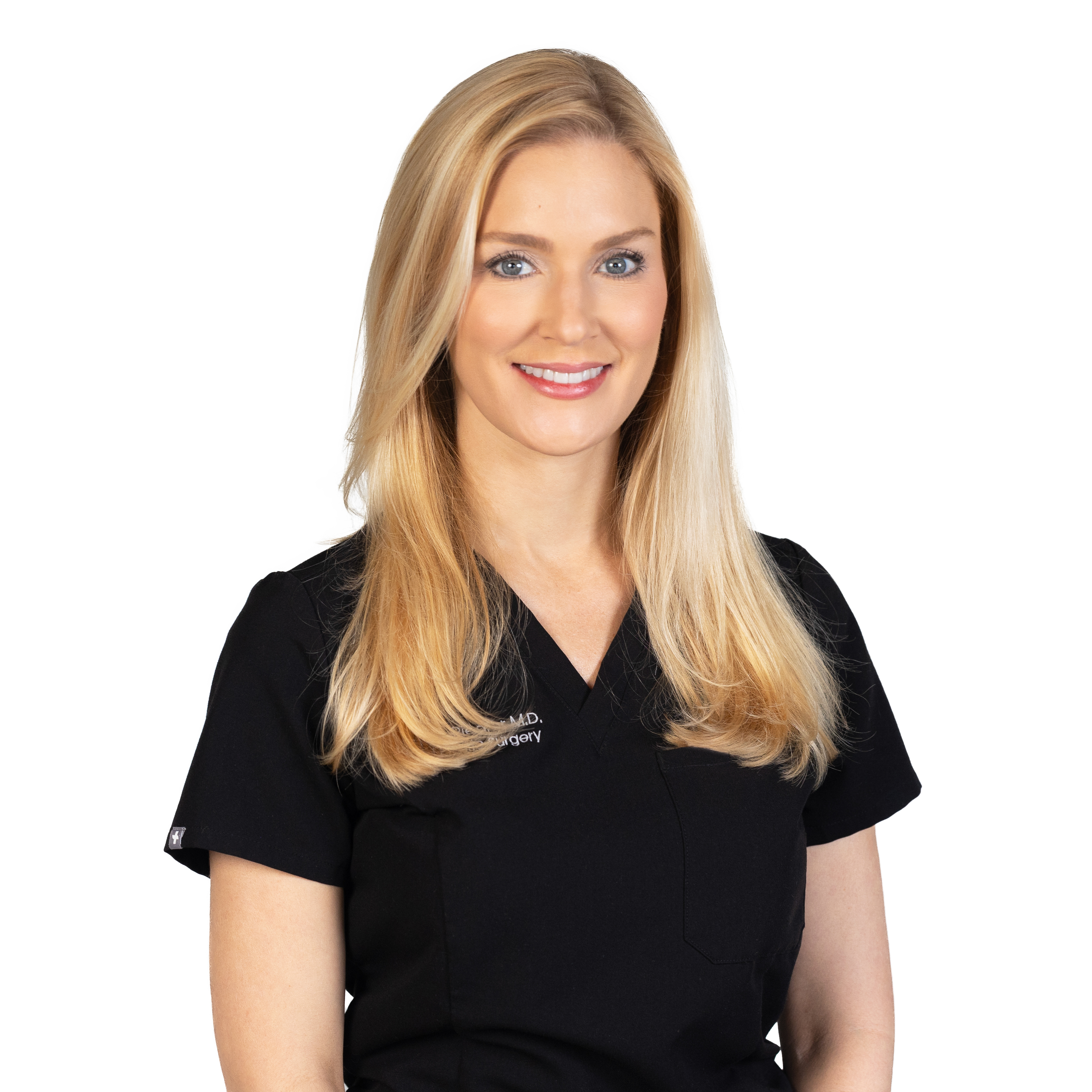
Plastic Surgeon
Dr. Kiersten Riedler was born and raised in San Diego and graduated from Harvard University with honors in neurobiology and a foreign language citation in Spanish. She earned her medical degree from the University of Southern California Keck School of Medicine, where she also completed a 5-year residency program in otolaryngology – head and neck surgery. At USC, much of her training took place at LAC+USC Medical Center, also known as LA County Hospital, where she predominantly cared for underserved, Spanish-speaking patients.
Dr. Riedler is fluent in written and spoken Spanish and became a certified medical interpreter at LAC+USC Medical Center. After residency, she completed a one-year fellowship in facial plastic and reconstructive surgery in Beverly Hills.